
Yogyakarta, usually shortened to Jogja, is the cultural heart of Java: a university city with a sultan, a palace, a long tradition of batik, gamelan and shadow puppetry, and two of the great religious monuments of Southeast Asia within an hour or so by road. Borobudur, the vast Buddhist monument to the northwest, and Prambanan, the Hindu temple compound to the east, were both built in the ninth century, and both are on UNESCO's World Heritage list. Above them all stands Mount Merapi, one of the most active volcanoes in Indonesia.
The temples are the reason most people come, but the city deserves time of its own. Give it at least two or three days, and expect to start early: heat and crowds both build by mid-morning.
Borobudur and its changed rules
Borobudur is a stepped pyramid of volcanic stone rising from the Kedu plain, about an hour or more northwest of Yogyakarta by road depending on traffic. Its lower galleries are lined with more than two thousand carved relief panels showing the life of the Buddha, Buddhist teachings and scenes of everyday life in ancient Java, and its upper circular terraces carry rows of perforated stupas, each holding a seated Buddha. Pilgrims walk clockwise around each level, rising symbolically towards enlightenment.
The rules for visiting have changed in recent years to protect the stone, which was being worn down by millions of feet. Climbing onto the monument itself is now limited by a daily quota and timed tickets, and visitors who go up are given special sandals to wear. The old sunrise visits from the top terraces were stopped, and access at dawn has changed more than once since. Some people now watch the sun rise over the monument and the misty plain from nearby hills instead.
Even without climbing, the grounds and the museum near the monument are worth a slow walk, and the two smaller temples of Mendut and Pawon, on a line to the east, are quieter and often overlooked. Inside Mendut sits a large stone Buddha, seated with his feet on the ground rather than cross-legged, flanked by two bodhisattvas, and the dim chamber is often almost empty. Each year at Vesak, the full-moon festival marking the Buddha's birth, enlightenment and death, monks and pilgrims walk in procession from Mendut to Borobudur, and the area is very crowded.
Prambanan's Hindu temples
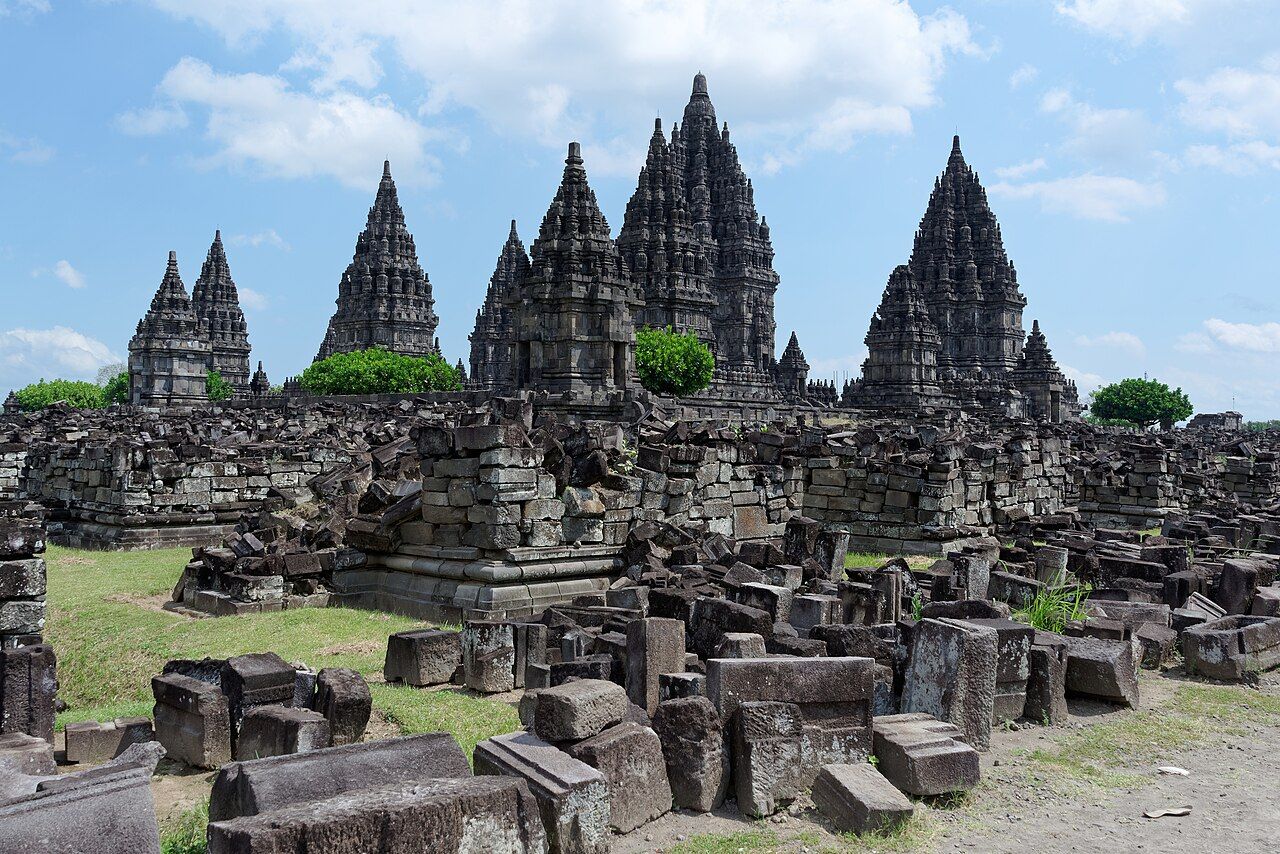
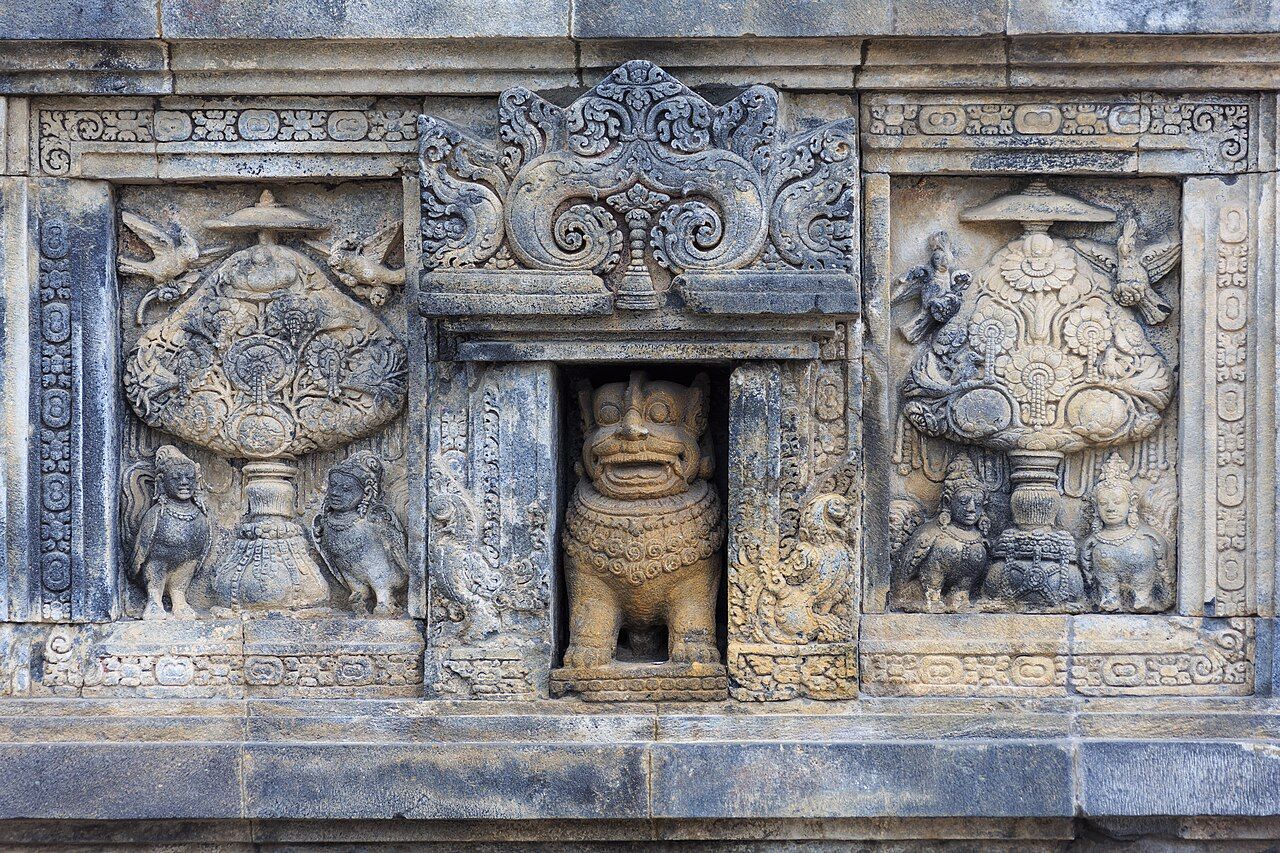
Prambanan, east of the city, is the largest Hindu temple compound in Indonesia. Its central courtyard is dominated by tall, slender towers dedicated to Shiva, Vishnu and Brahma, with smaller temples for their mounts facing them. The tallest, Shiva's temple, rises to about 47 metres and is carved with scenes from the Ramayana. Hundreds of smaller shrines once surrounded the main group; many now lie as fields of fallen stone, waiting to be pieced back together.
credit
CEphoto, Uwe Aranas · CC BY-SA 3.0An earthquake in 2006 damaged several temples, and some parts may be closed or under scaffolding when you visit. Within the same park lies Sewu, a large Buddhist temple complex, a reminder of how Hindu and Buddhist courts built side by side in this part of Java. Late afternoon light suits Prambanan well. In the dry season, a Ramayana dance performance is staged on an open-air stage with the temples lit up behind.
 Next on the tag · AsiaThe Kumano Kodo, one stone step at a time
The kraton, Taman Sari and batik
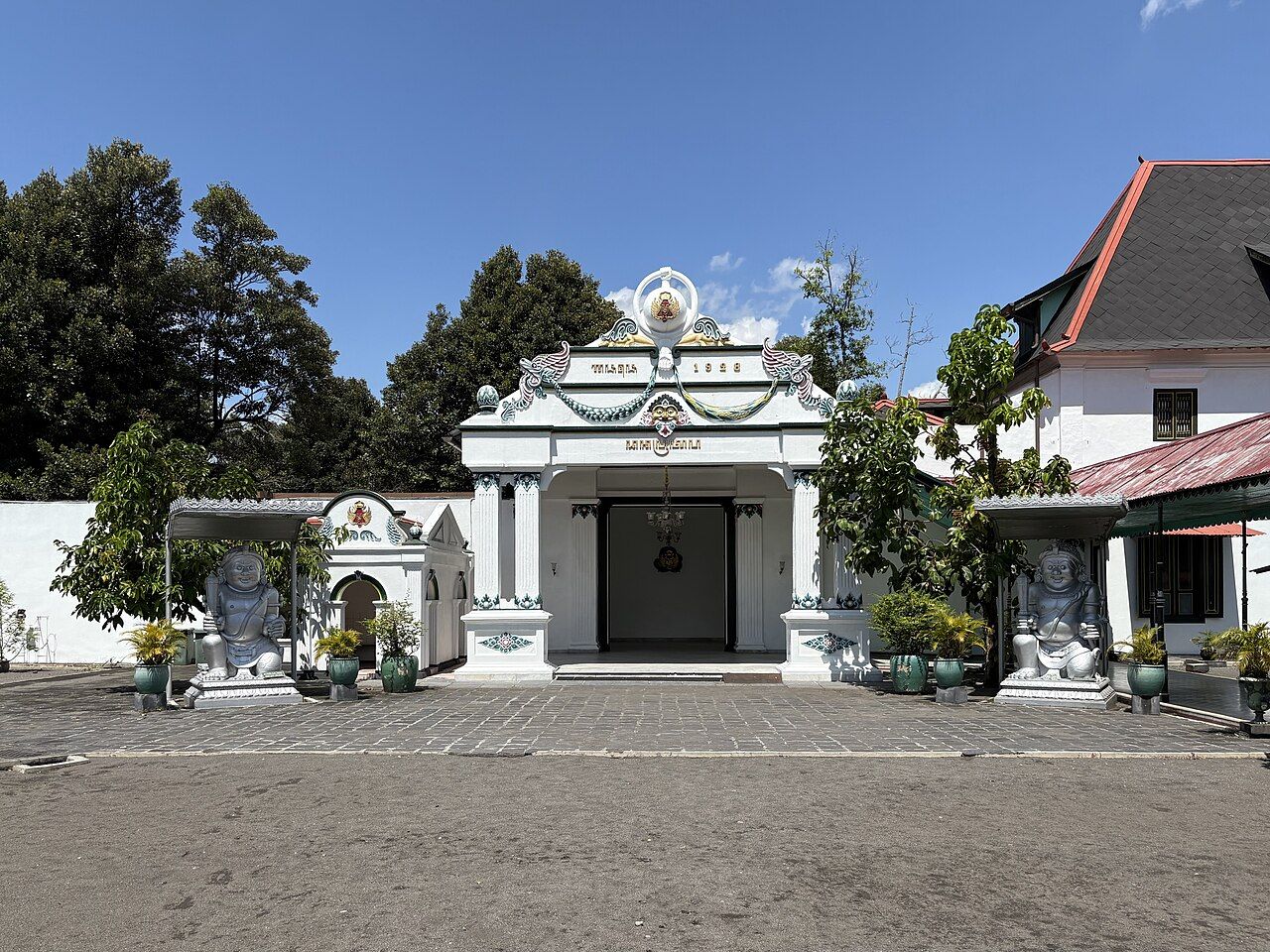
The kraton, the sultan's palace, sits at the centre of the old city. Yogyakarta is a special region of Indonesia whose sultan also serves as its governor, and the palace remains a living institution rather than a museum, with courtiers in traditional dress and pavilions open to visitors on certain mornings. Gamelan music, dance or shadow puppetry are performed on some days. The palace closes early in the afternoon and on some days of the week.
credit
Chainwit · CC BY 4.0A short walk away, Taman Sari is the ruin of an eighteenth-century royal pleasure garden, with bathing pools, underground passages and a small kampung, or village quarter, built among the old walls. Around it you will find batik workshops where you can watch wax being drawn onto cloth by hand. Indonesian batik is recognised by UNESCO as an intangible cultural heritage. Be wary of friendly strangers who steer you to a gallery with a story about a final day of an exhibition; it is a sales routine, and you can simply walk on.
Jalan Malioboro, the long main street running north from the palace, is busy with shops, street food and becak, the pedal rickshaws, especially in the evening.
Merapi, the volcano above the city
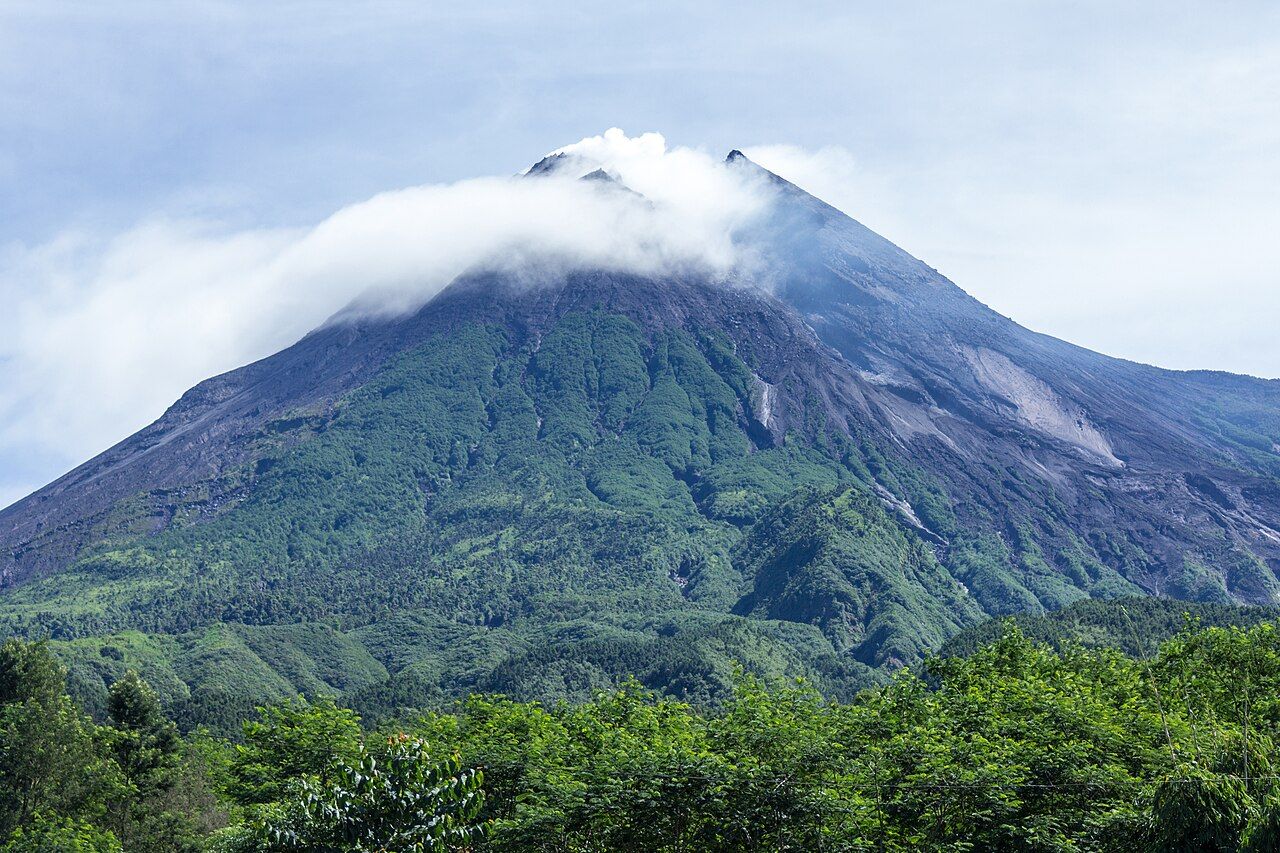
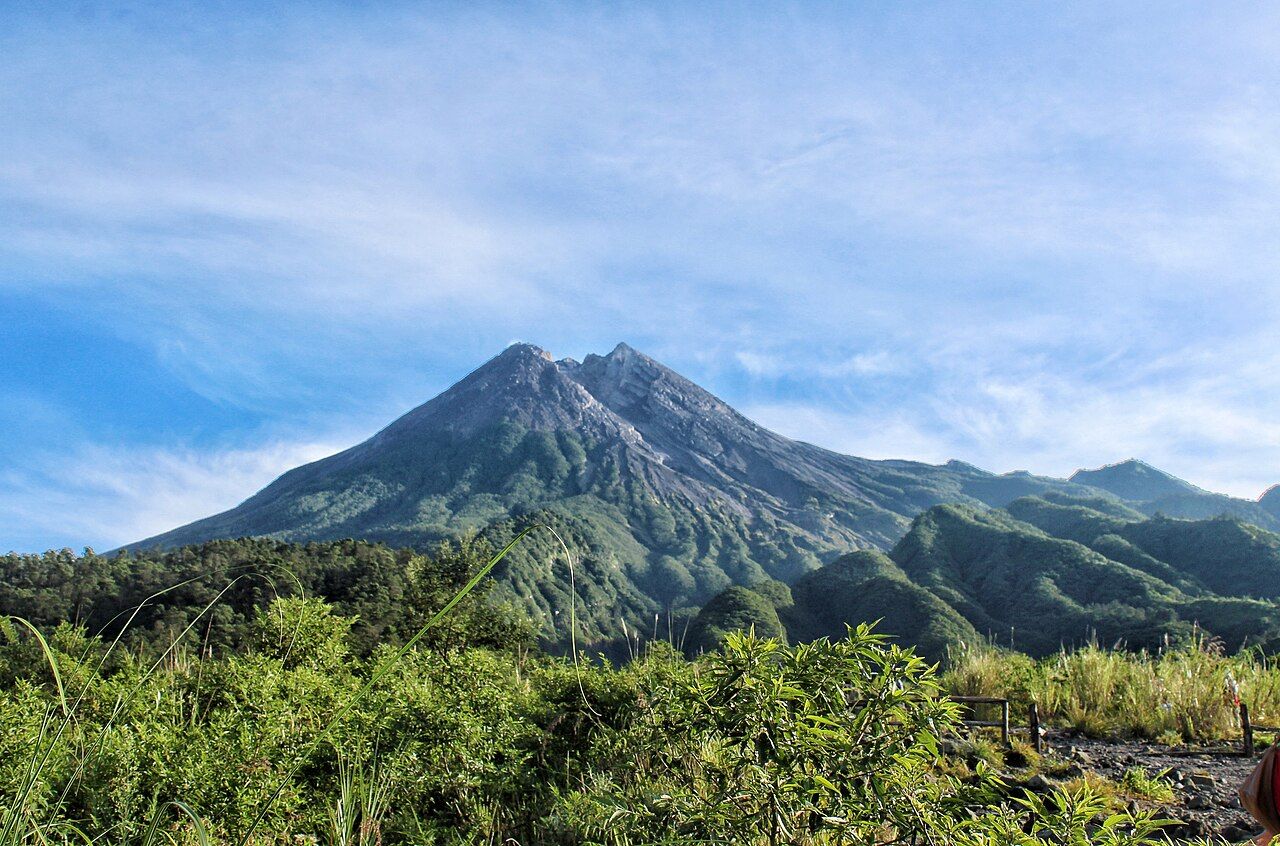
Mount Merapi rises north of the city, often wrapped in cloud by midday. It erupts frequently, and a major eruption in 2010 killed many people and destroyed villages on its slopes. Jeep trips run through the old lava fields and to small museums in houses left as they were after the eruption, which give a sobering sense of the mountain's power.
credit
Crisco 1492 · CC BY-SA 3.0Access to the upper slopes depends on the volcano's activity, and exclusion zones are set and changed by the authorities. Climbing to the summit has been closed for long periods.
credit
Rosalia.silaban · CC BY-SA 4.0Timing, dress and eating
The dry season, roughly May to September, brings clearer mornings and fewer downpours. The wet season brings heavy afternoon rain, though mornings are often fine. Indonesian school holidays and long weekends make the temples very busy, so weekdays are calmer.
At the temples and the palace, cover your shoulders and knees; a sarong is sometimes provided. Carry water and a hat, since there is little shade. Start early, rest at midday, and go out again in the late afternoon.
Start early, rest at midday, and go out again in the late afternoon.
Javanese food has plenty for vegetarians, with care. Tempeh and tofu are everywhere, gado-gado combines vegetables with peanut sauce, and Jogja's famous gudeg is a sweet stew of young jackfruit, though it is usually served with chicken, egg or rich coconut sauce made with stock. Sambal and some peanut sauces often contain terasi, a fermented shrimp paste, so ask for it to be left out. The notes on eating vegetarian on the road cover the phrases. From Java, many travellers continue east by air or overland towards Lombok and the Gili islands, or compare temple-going here with the backwaters and churches of Kerala.