
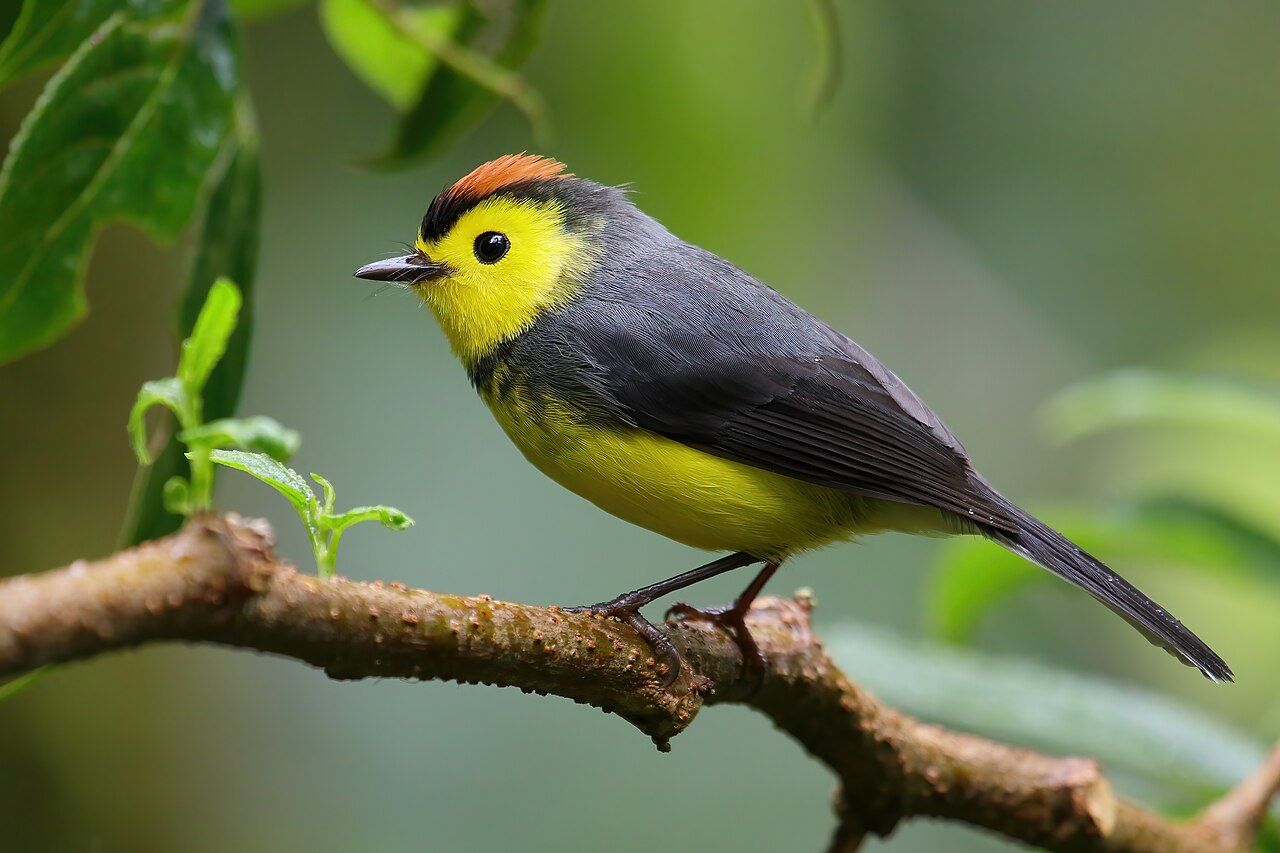
Monteverde lies high in the Tilarán mountains of northwestern Costa Rica, where moist winds from the Caribbean side rise over the Continental Divide and condense into cloud. The forest that grows in this near-permanent mist is dense with mosses, ferns, orchids and bromeliads, and it shelters a huge range of birds, insects, amphibians and mammals. Several reserves protect it, and the small town of Santa Elena serves as the base for visitors.
The area has a particular history. In the early 1950s a group of Quaker families from the United States settled here to farm and make cheese, and they set aside part of the forest to protect their water supply. That land became the core of the conservation areas that draw visitors today.
The reserves and the hanging bridges
The Monteverde Cloud Forest Reserve is the best known, with well-kept trails through old forest and a viewpoint on the divide when the cloud lifts. The Santa Elena reserve, a little higher and to the north, is smaller, often quieter, and community-run. A large private reserve, the Children's Eternal Rainforest, protects a great area of forest on the slopes beyond, with its own trails. Each has its own entry fee and opening hours, and some limit numbers at busy times.
Several privately run parks have built hanging bridges, long suspension walkways that carry you through the canopy at the level of the treetops. They give a view you cannot get from the forest floor, and many are suitable for people who do not want a steep hike. Ziplines are also widely offered. Compare what each place offers, and remember that busy bridges with chatty groups see less wildlife than quiet trails.
Quetzals and how to see them
The resplendent quetzal, with its emerald body, red chest and long tail streamers, is the bird many visitors hope to see. Quetzals live in the cloud forests of Central America, and around Monteverde they are most often seen in the first half of the year, when they breed and feed on small wild avocados. Even then, they can sit motionless in the canopy for long periods.
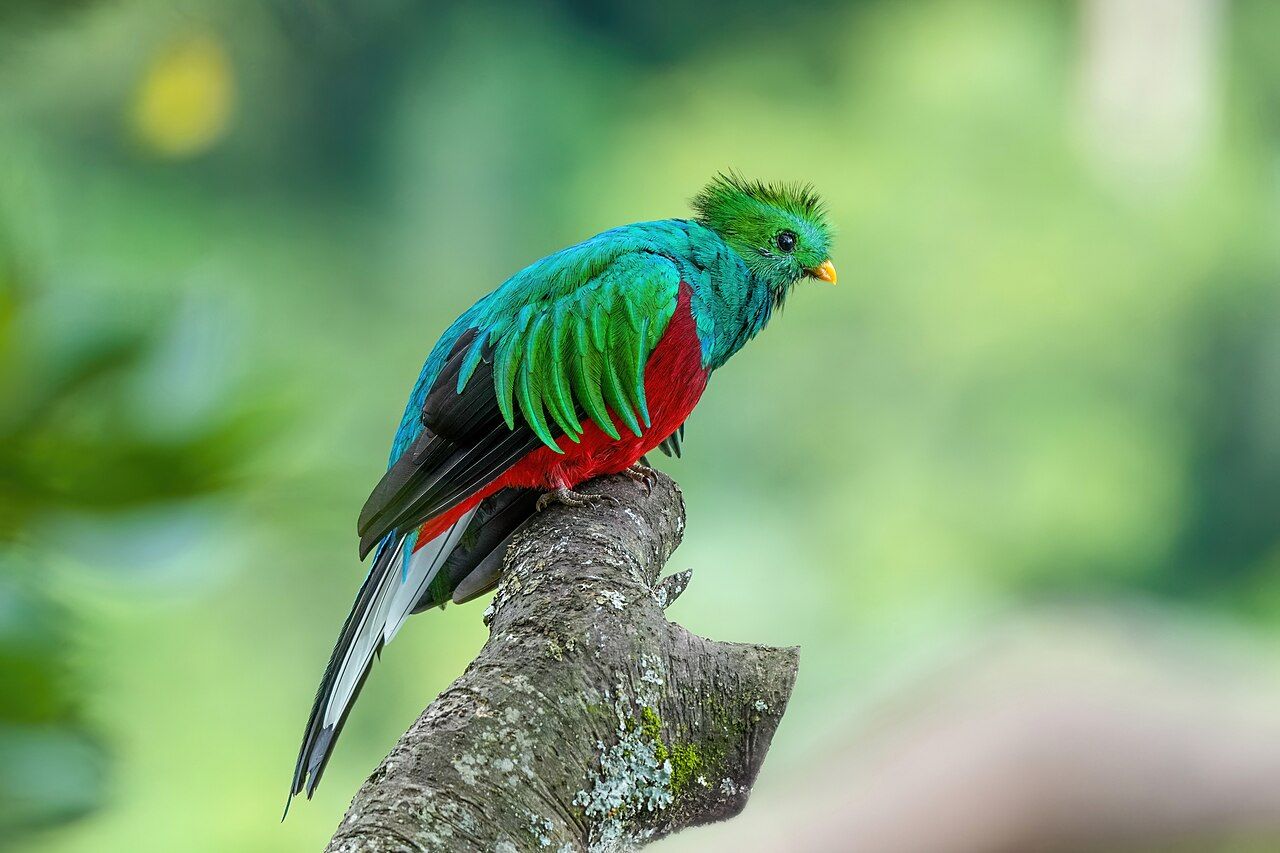
credit
Giles Laurent · CC BY-SA 4.0Your best chance is a naturalist guide. Good guides know where birds have been feeding, recognise calls, and carry a spotting scope that lets you see a distant bird in detail. Go at opening time, when birds are most active and the trails are quiet. Bring binoculars of your own if you have them.
Listen as well as look. In the breeding season the three-wattled bellbird gives one of the loudest calls in the forest, a metallic bonk that carries a long way, and hummingbirds of many species buzz past at head height. Monteverde was also the only home of the golden toad, a brilliant orange amphibian last seen in 1989 and now considered extinct, a reminder of how fragile these forests are.
 Next on the tag · Latin AmericaOaxaca for a slow week
Night walks
After dark the forest changes. Guided night walks, offered in the reserves and on private land around Santa Elena, look for animals that hide by day: tarantulas in their burrows, stick insects, glass frogs, sleeping birds, and sometimes sloths, kinkajous or snakes. The guide carries a powerful torch and does the searching; you follow quietly.
Wear closed shoes and long trousers, bring your own small torch, and keep your expectations open. Some nights are rich, others quiet. Do not touch animals or shine bright lights into their eyes for long.
The road up, and getting around
Monteverde was long famous for its rough access road. Much of the way up is now paved, but stretches can still be steep, narrow and slow, and the drive takes longer than distances suggest. Public buses run from San José and from towns on the Pan-American Highway, and shared shuttles connect with other tourist areas. From the Arenal area, one popular route combines road transfers with a boat crossing of Lake Arenal.
If you are driving yourself, avoid arriving after dark, when mist and bends make the mountain roads hard work. Within the area, taxis and local buses link the town with the reserves. Give yourself a quiet first evening if you have just flown in; the notes on your first days after arriving apply here too.
Mist, rain and what to wear
Monteverde is cool for the tropics, and it is often damp. From roughly December to April, strong winds blow across the ridge and drive fine mist through the forest, while the rainy season, about May to November, brings heavier downpours, usually in the afternoon. Temperatures are mild by day and cool at night.
Bring a good rain jacket, a warm fleece, quick-drying clothes and shoes with grip for muddy trails. Keep your camera and phone in a dry bag. The clearest light tends to come early, before the haze builds. Stay on the marked trails, which are well kept but can be slippery, carry water and a snack, and do not feed any animals, including the coatis that sometimes wander near entrances and roads.
Eating vegetarian is easy. A casado, the everyday Costa Rican lunch, combines rice, black beans, fried plantain, salad and a main dish that can be eggs or vegetables, and gallo pinto, rice and beans fried together, is the standard breakfast. Ask how beans are cooked if you avoid all animal fats. From Monteverde, many travellers continue north towards Nicaragua and the colonial streets of Granada, or compare this cloud forest with the wax palm valleys of Colombia's coffee country.