
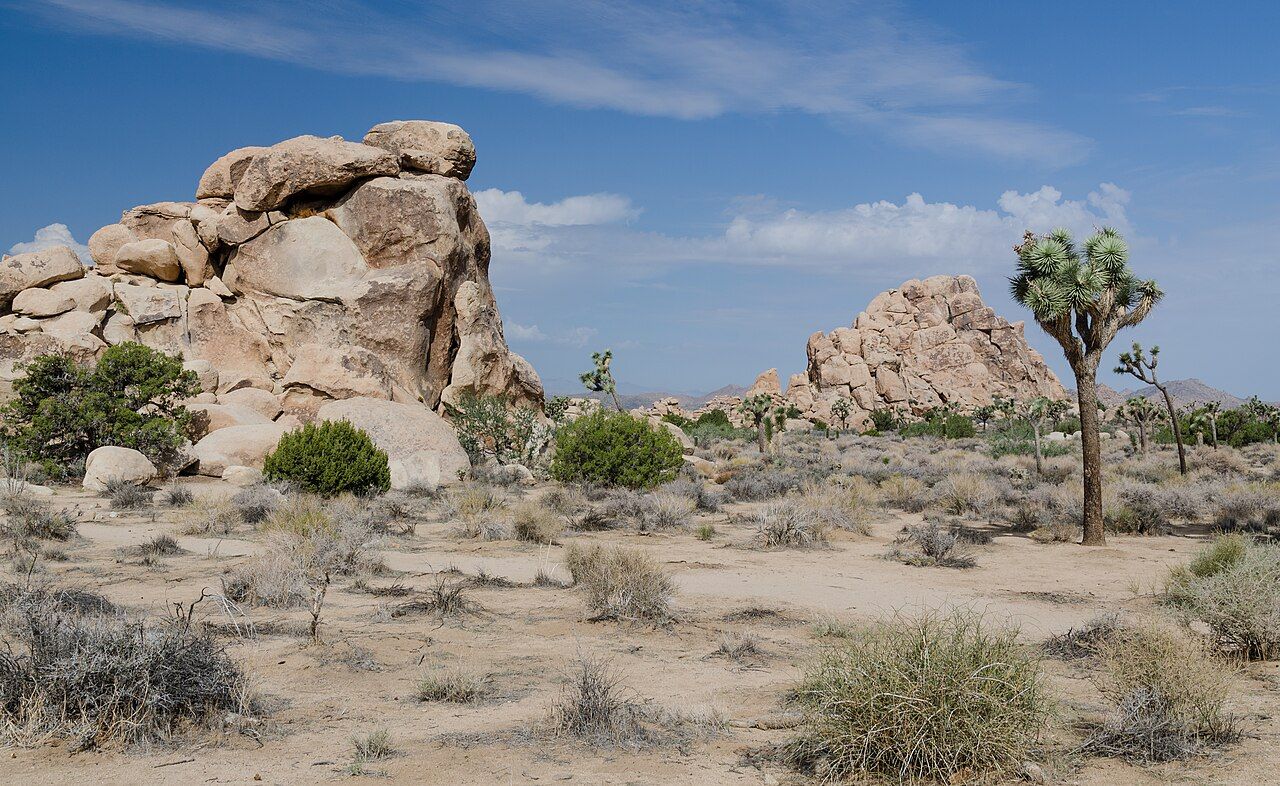
Joshua Tree National Park sits where two deserts meet. The higher, cooler Mojave in the west and north is the land of the Joshua trees themselves, shaggy yuccas with arms held at odd angles, scattered among heaps of rounded granite. Drop south and east and the ground falls into the lower, hotter Colorado Desert, where the Joshua trees thin out and ocotillo and cholla take over. One main road crosses both, and a day spent driving it shows you the change in plants, light and temperature more clearly than any sign.
The cool months are the reason to come. From late autumn to spring the days are usually mild enough to scramble and walk, though nights can drop close to freezing and the odd winter storm brings wind and even a dusting of snow to the high country. In summer the heat turns serious, and most of what makes the park a pleasure becomes a risk.
Water first, everything else after
This is the part people underplay. The park has very little drinking water, and the few taps are at the edges, not along the trails. There are no shops, no cafes and no fuel inside. You fill bottles and a large jug in the towns before you drive in, and you keep a reserve in the car that you do not touch until you are heading out.
A sensible rule is several litres for each person on a day of short walks, more if you plan a longer hike, and more again if the day warms up. Salty snacks help. Phone signal is patchy across much of the park, so tell someone your rough plan and download a map before you lose coverage. Even in the cool season the sun is strong and the air is dry; a hat and a long-sleeved shirt make a bigger difference than sunscreen alone.
- Fill up in the towns along the northern edge before entering.
- Carry a paper map as well as the one on your phone.
- Start walks early and finish the longer ones before mid-afternoon.
Hidden Valley and the rock piles
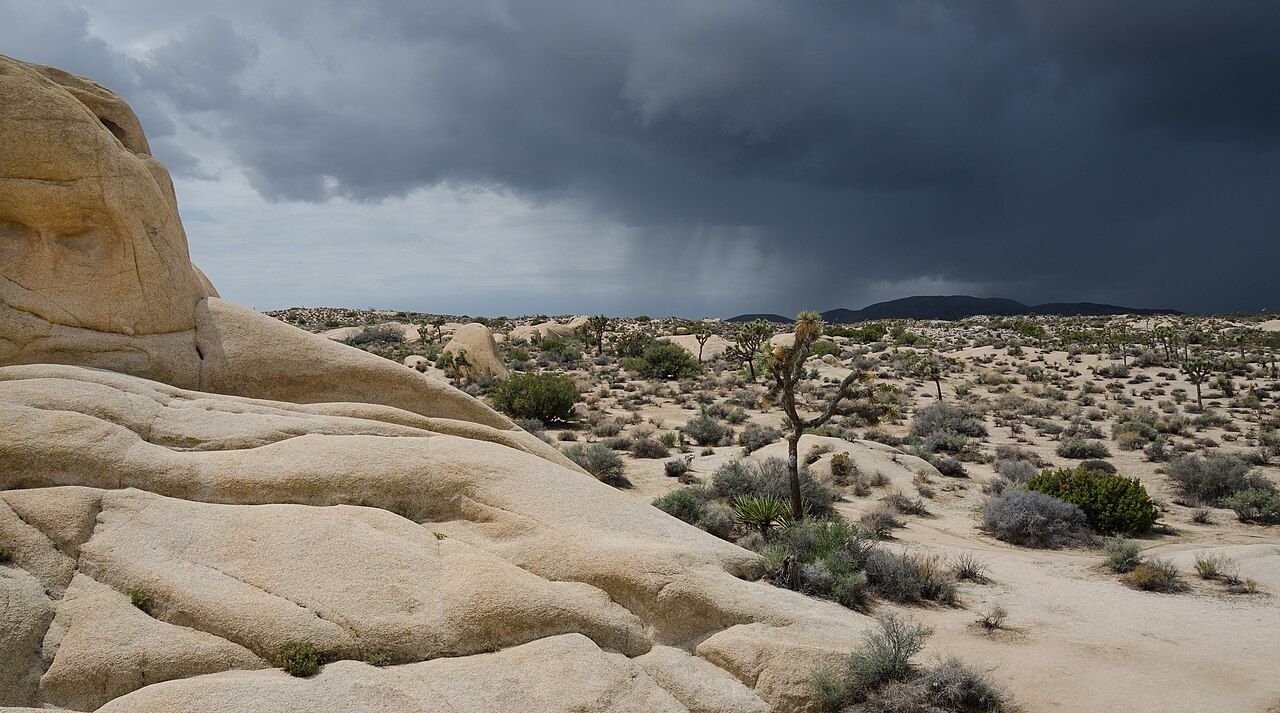
Hidden Valley is the classic first walk: a short loop into a basin ringed by boulders, easy enough for most people and a good introduction to how the granite weathers into domes, slabs and stacked balls. Climbers use the walls around it, and on a weekend morning you will hear calls and see ropes high above the path. Stay on the trail where it is marked; the crust of soil between the shrubs is alive and takes years to recover from footprints.
credit
Tuxyso · CC BY-SA 3.0The rock piles continue for miles around the campgrounds in the west of the park, and you do not need a named trail to enjoy them. Pull into a parking area, walk a few minutes, and pick a low boulder to sit on. If you scramble, remember that going up is easier than coming down, and that rock which feels warm and grippy at noon can be cold and slick at dusk.
Keys View and the long look south
A paved spur road climbs to Keys View on the crest of the Little San Bernardino Mountains. From the top you look down over the Coachella Valley, across to the bulk of Mount San Jacinto, and on a clear day toward the Salton Sea. The line of the San Andreas Fault runs along the valley floor below. Haze often softens the view, so the hour around sunset, when the ridges stack up in shades of blue, tends to be the best time. It is also cold and windy up there; bring the layer you think you will not need.
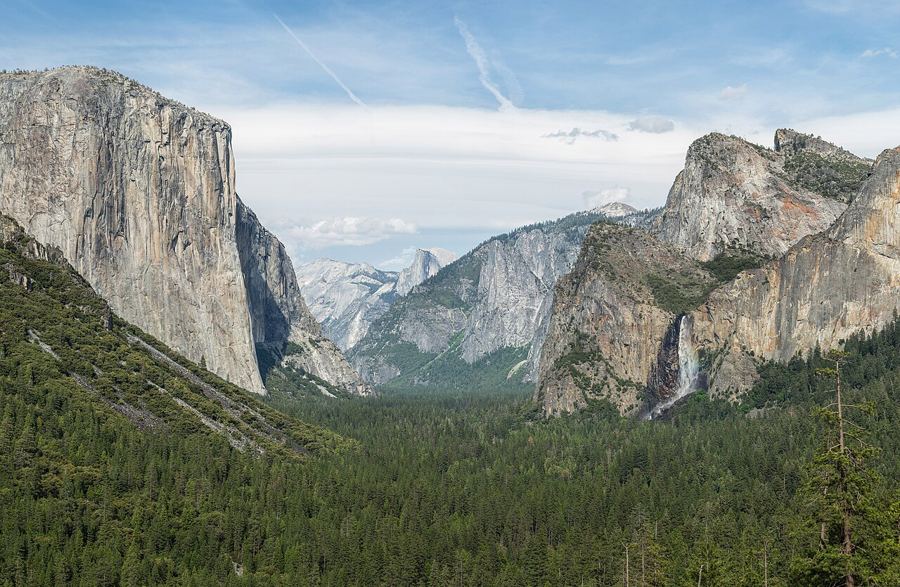
If you are pairing this park with a longer drive through the West, a few days here combine easily with a slower run up to the granite of Yosemite, which shares the same love of rock and the same need to plan around seasons.
 Next on the tag · American WestYosemite Valley without the traffic
The Cholla Cactus Garden
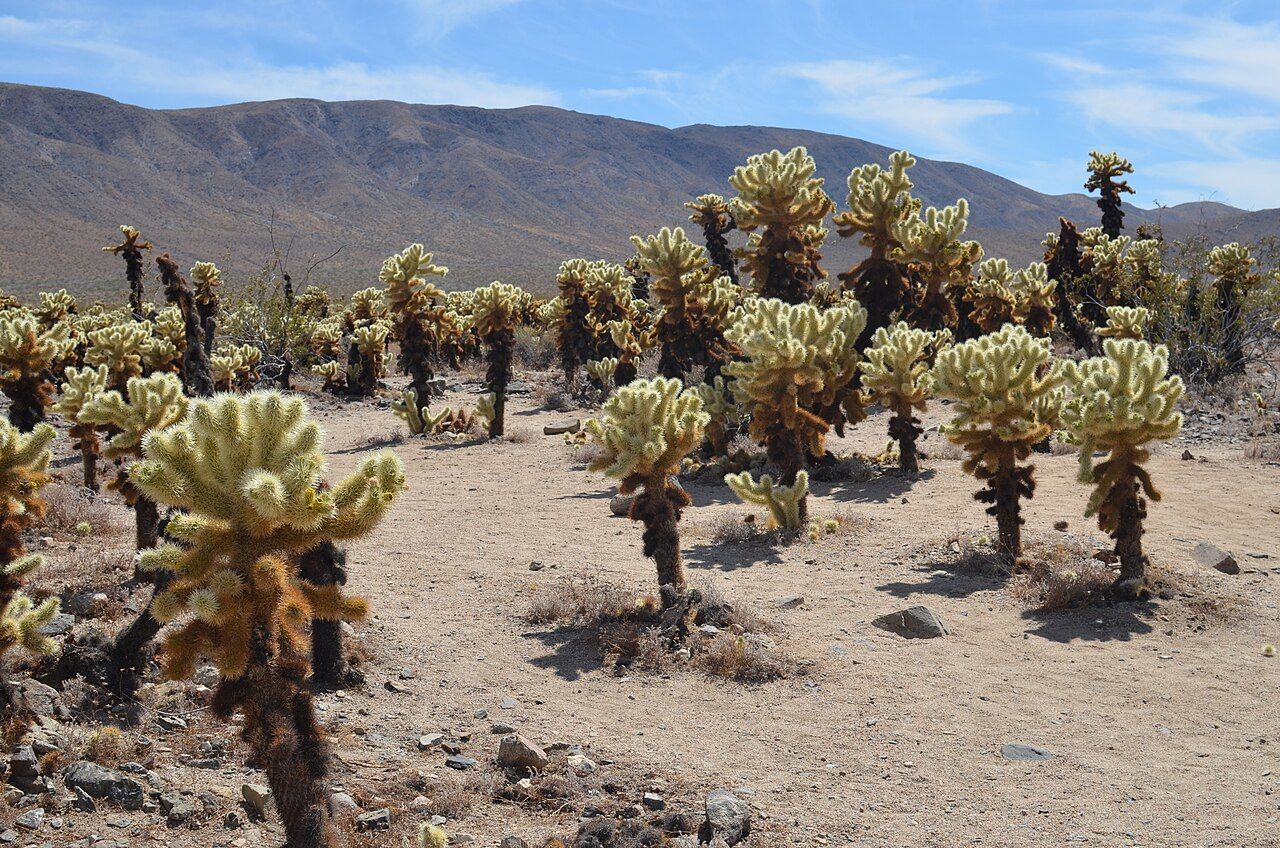
Driving south from the Mojave side, the road drops and the Joshua trees vanish. Not long after, a dense stand of teddybear cholla fills both sides of the road, lit gold when the sun is low. A short loop path runs through it. The cactus looks soft, but its spines are barbed and its joints break off at the lightest touch, which is why people call it jumping cholla. Keep to the path, keep children close, and wear closed shoes.
credit
Steven Lek · CC BY-SA 4.0If a joint does attach itself to you, do not grab it with your fingers. A comb slid between the cactus and your skin or clothing, then flicked away, is the usual way to lift it off. Tweezers help with the strays. It sounds dramatic, but with a comb in your pocket it is a minor nuisance rather than a ruined afternoon.
After dark
The park is far enough from big cities that the night sky is properly dark, especially in the east and south. On a moonless night the Milky Way stands out clearly in the cooler months, and you see more stars than most city dwellers ever have. Pull into a parking area well away from the road, switch off your headlights, and give your eyes twenty minutes or so to adjust. A red light on your headlamp keeps your night vision and does not annoy anyone nearby.
Wildlife moves at night too. Drive slowly, especially at dusk, because tortoises, rabbits and coyotes cross the road. Desert tortoises are protected; if one is in the road, let it pass rather than moving it yourself.
Sleeping, eating and getting in
The park has several campgrounds. Some take reservations in the busy cool season and others are first-come, first-served, and the arrangement changes. The towns along the northern edge have motels and rental houses, and staying there means a short drive in each morning. There is an entrance fee or pass for vehicles; again.
For food, you stock up in town. Vegetarian eating is straightforward if you shop: the grocery stores outside the park carry the usual bread, cheese, fruit and snacks, and some cafes in the towns lean toward plant-based menus. Inside the park you eat what you brought, so pack a cool box and more than you think. If you are used to finding a meal on any corner, eating vegetarian on the road covers the habits that make places like this easy.
Most visitors come by car from the Los Angeles area or from Palm Springs. There is no meaningful public transport inside the park. A normal car is fine on the paved roads; the dirt routes deserve a higher-clearance vehicle and a check on conditions first. Give yourself two or three days if you can: one for the western rock country, one for the drive south through the cholla, and an evening for the stars. A slower pace suits the desert, and making the journey the destination is a good way to think about the long drives on either side.