
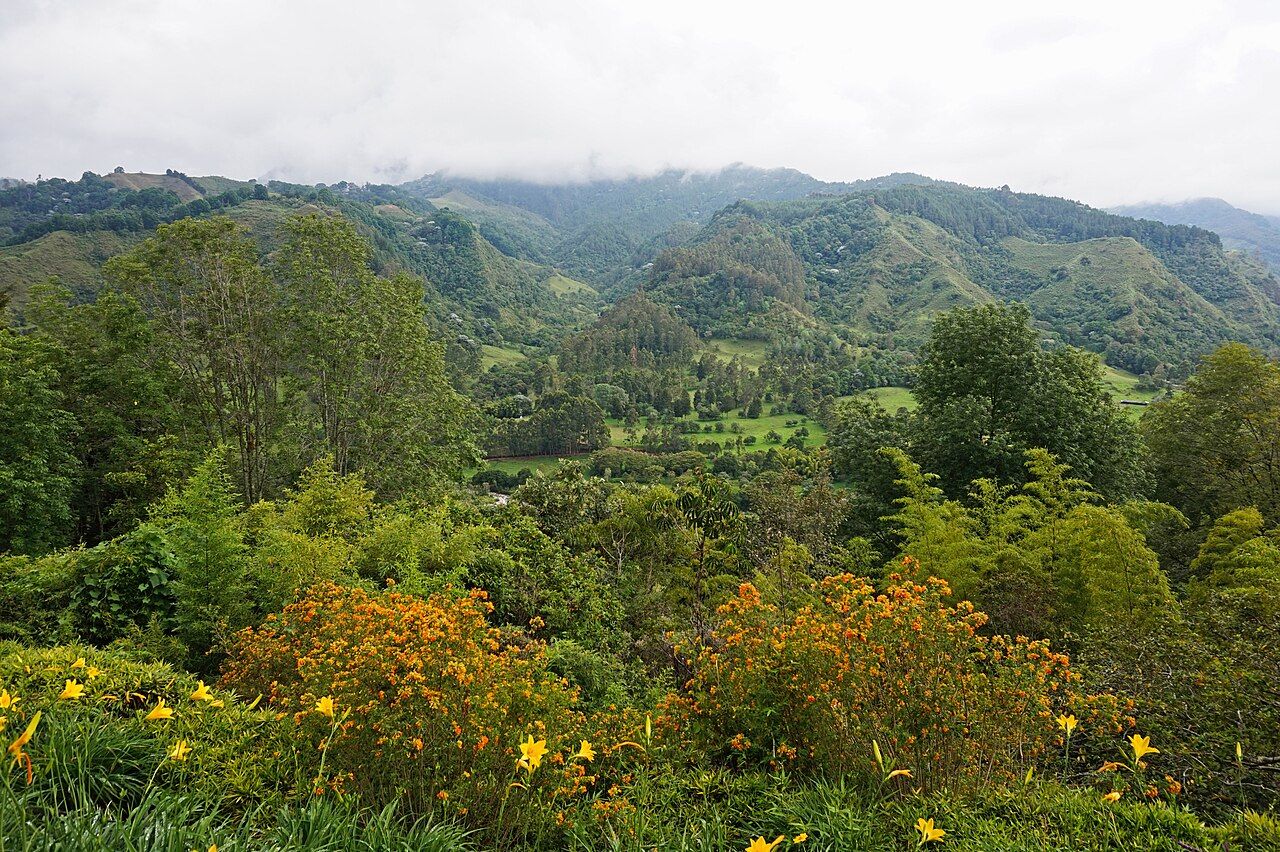
Salento is a small town in the department of Quindío, high in Colombia's Central Cordillera, and one of the oldest settlements in the region. It sits within the Coffee Cultural Landscape of Colombia, an area of farms, small towns and steep green hills that UNESCO recognises for its long tradition of growing coffee on mountain slopes. Just outside town lies the Valle de Cocora, where the Quindío wax palm, Colombia's national tree, rises from the pastures in long, thin columns.
Salento has become one of the most visited towns in the coffee region, and its main street can be busy, especially at weekends. But the hills around it are wide, the walks are good, and the pace slows as soon as you leave the plaza.
The town and its balconies
Salento's houses are built in the traditional style of the region, with walls of bamboo and earth, tiled roofs and wooden balconies and doors painted in bright colours. The main street, running from the plaza, is lined with craft shops and cafés, and at its far end a long flight of steps climbs to a viewpoint over the green valley of the Quindío River and, on clear days, towards the mountains.
In the evenings, people gather in the plaza, and in some bars you can try tejo, a traditional game in which players throw heavy metal discs at a clay target packed with small explosive charges that bang when hit. The town sits at about 1,900 metres, so evenings are cool, and a warm layer is welcome.
The Valle de Cocora and the wax palms
The Quindío wax palm can grow to around 60 metres, making it one of the tallest palms in the world. In the Valle de Cocora, hundreds stand in the pastures and on the slopes, their slender grey trunks topped by small crowns of leaves, often with cloud drifting between them. The palms are protected, and the species is considered threatened, partly because cattle grazing prevents young palms from growing.
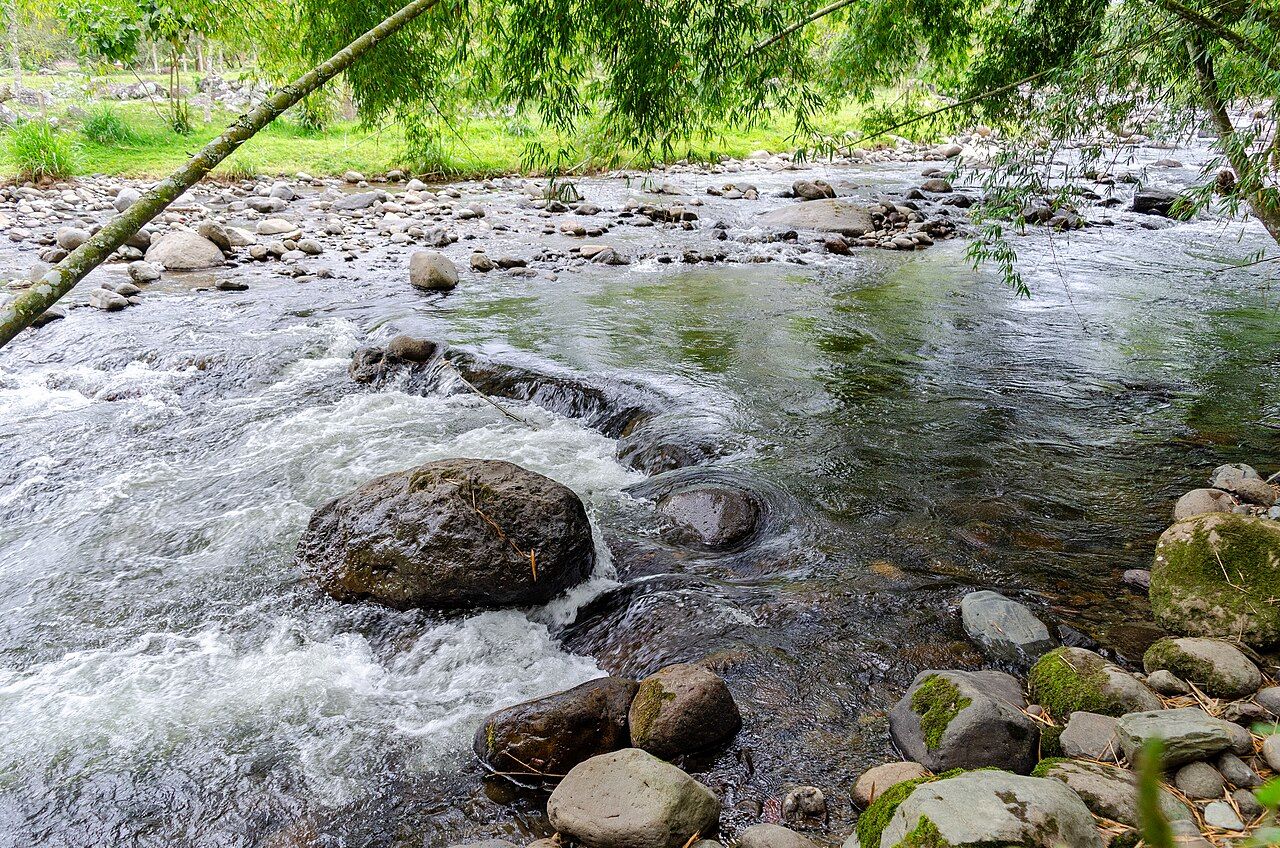
The classic walk is a loop of five or six hours from the valley entrance. It follows the river upstream through cloud forest, crossing it on a series of narrow wooden suspension bridges, climbs steeply to a ridge, and then descends through the palm-covered pastures back to the start. Parts of the trail cross private land, and small entry fees are collected at a few points, so carry cash in small notes. If you prefer a shorter walk, you can head straight up into the palm valley and return the same way.
credit
Steffen Schmitz · CC BY-SA 4.0Start early. The light is best in the morning, the trail is quieter, and rain often arrives in the afternoon, turning the forest sections into deep mud. Wear boots or shoes you do not mind ruining, or rent rubber boots in town. Stay on the path and do not climb on or carve into the palms.
 Next on the tag · Latin AmericaSan Cristóbal de las Casas in the highlands
The Willys jeeps
The quickest way to Cocora is in one of the old Willys jeeps that wait on the main plaza. These sturdy vehicles, many dating from the middle of the twentieth century, became the workhorses of the coffee region, carrying sacks of beans, families and furniture on the steep farm roads, and they still serve as shared taxis. Passengers squeeze onto benches inside, and when the jeep is full, a few stand on the back step holding on.
Jeeps leave when they fill, and the trip to the valley takes about half an hour. Departures are frequent in the morning; in the late afternoon, there can be a wait for the return, so do not leave it too late. Check times and fares in the plaza the evening before.
Coffee farms, in general terms
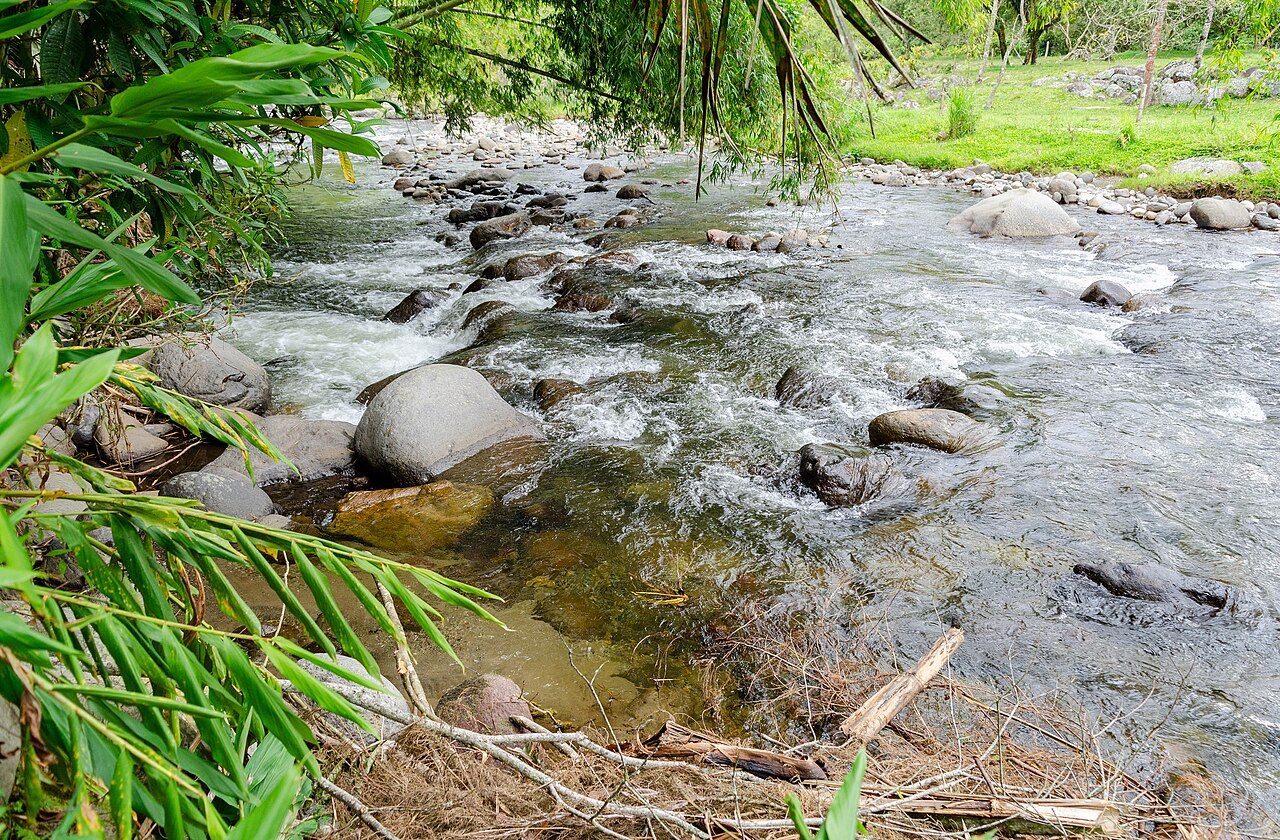
Many small farms around Salento welcome visitors for a tour that follows coffee from the plant to the cup: how the bushes are grown in the shade, how the ripe red cherries are picked by hand on steep slopes, and how the beans are washed, dried and roasted. Most tours end with a tasting. Some farms are within walking distance of town along country roads; others are reached by jeep.
credit
Steffen Schmitz · CC BY-SA 4.0Coffee in this region is harvested in two seasons each year, a main harvest and a smaller one, and visiting during a harvest shows the work at its busiest. Ask whether the farm you visit grows and processes its own beans, how it treats its pickers, and whether you can buy coffee directly from the producer. Small farms that do their own processing often give the most interesting visit.
Rain, timing and getting there
The coffee region is green because it rains. There are two wetter periods each year, roughly April to May and October to November, but showers can come at any time, usually in the afternoon. December to March is generally the driest stretch, and also the busiest, especially over Christmas, New Year and Easter. Bring a rain jacket on every walk and keep your phone in a waterproof bag.
Salento is reached by bus from Armenia, the departmental capital, or from Pereira, both of which have airports. If the town feels busy, nearby Filandia is a similar hill town with fewer visitors and its own viewpoint tower.
Eating vegetarian takes some planning. The local speciality is trout, and the regional dishes rely on beans cooked with pork, rice, plantain and meat. But arepas, fried plantains, eggs, soups and fresh fruit are everywhere, and Salento's visitor-oriented cafés usually have meat-free options. If you are travelling the length of South America, Salento is a gentle contrast to the high, cold desert around the Salar de Uyuni, and its cloud forest invites comparison with Monteverde in Costa Rica. A walk among the wax palms early in the morning is one of the quiet highlights of travelling slowly through Colombia.