
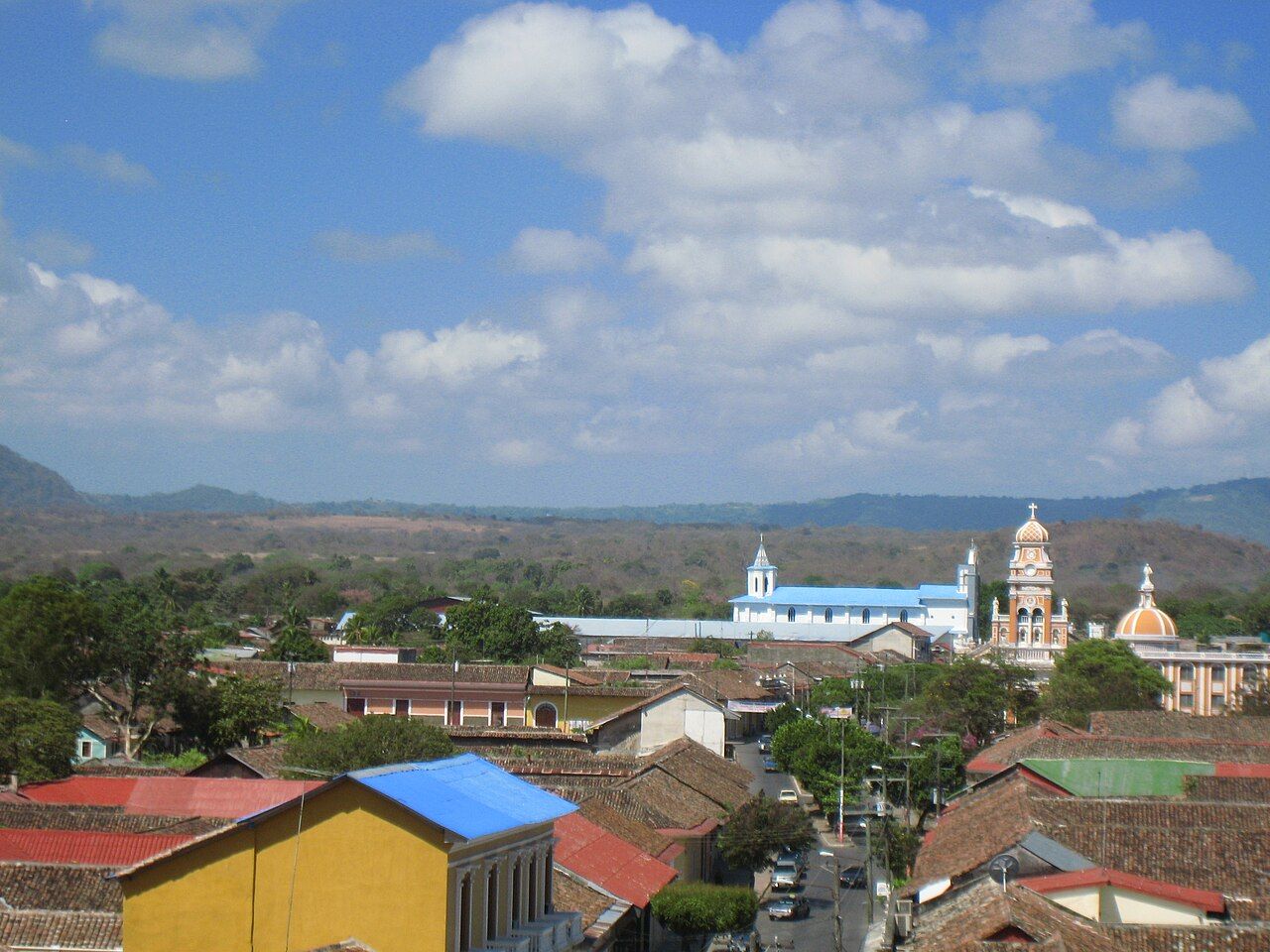
Granada was founded by the Spanish in 1524 on the northwestern shore of Lake Nicaragua, the largest lake in Central America, and it is one of the oldest colonial cities on the American mainland. Its centre is a grid of single-storey houses painted in strong colours, with heavy wooden doors and inner courtyards, and churches at every few blocks. Mombacho Volcano rises to the south, and the lake stretches away to the east like an inland sea.
Before you plan a trip, read the current official travel advisories issued by your own government.
Colonial streets and the cathedral
The central park, shaded by big trees, is the heart of the city. On its eastern side stands the cathedral, a yellow and white building rebuilt in the early twentieth century after the city suffered fires and wars. Horse-drawn carriages wait nearby for slow tours of the streets.
From the park, La Calzada, a long pedestrian street of restaurants and bars, runs east towards the lake. A few blocks west, the bell tower of the Iglesia La Merced is usually open to climb for a small fee and gives the classic view over the tiled roofs, the cathedral domes and the volcano. The former Convento San Francisco, one of the oldest buildings in the city, holds a museum with a collection of pre-Columbian stone statues from Zapatera Island in the lake.
The best way to see Granada is on foot in the early morning, when shutters open, people sweep the pavements and the light is soft. Many doors and courtyards are private homes; enjoy what you can see from the street.
Las Isletas
Just south of the city, a scatter of hundreds of small islands lies in the lake, formed long ago when part of Mombacho collapsed in an eruption and sent rock into the water. Boat trips wind between them, past islands covered in mango trees and palms, small fishing families' homes, larger weekend houses, and a small Spanish fort built to guard the city against pirates.
The trips leave from piers south of the centre. Herons, egrets, cormorants and kingfishers are common, and the light is best early or late. Agree the length of the trip and what it includes before you set off, and check that life jackets are on board.
 Next on the tag · Latin AmericaThe Salar de Uyuni and the altiplano
Masaya Volcano's crater
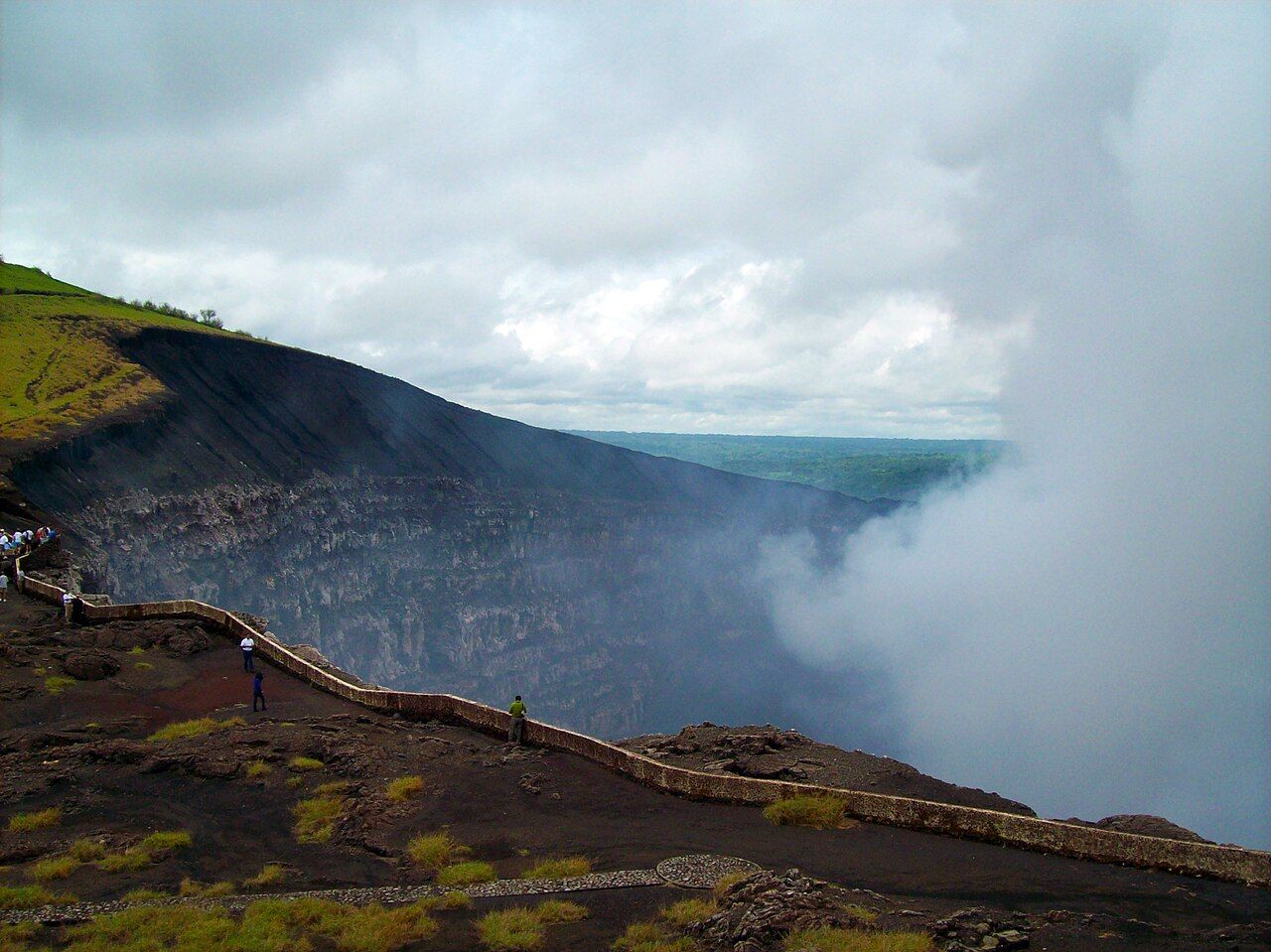
Masaya Volcano National Park, between Granada and Managua, protects one of the most active volcanoes in Central America. A road climbs to the rim of the Santiago crater, where on some days you can look down at glowing lava far below, and on others see only clouds of gas. Night visits, when the glow is easiest to see, are popular.
credit
Adalberto Hernández Vega · CC BY 2.0The gases are strong, so visits to the rim are kept short, and the park closes or limits access when activity or gas levels rise. The nearby town of Masaya has a large crafts market, and Laguna de Apoyo, a deep crater lake between Granada and Masaya, is a good place to swim and cool down.
Mombacho, the volcano that looms over Granada, has a different character: its upper slopes are covered in cloud forest, protected as a nature reserve, with trails around its old craters, orchids and bromeliads, and views over the lake and the isletas when the cloud clears. A steep road leads up to it, and visitors usually ride up in park vehicles rather than driving.
Heat, health and timing
Granada is hot all year. The dry season, roughly November to April, brings sunny days that grow hotter towards the end; the rainy season, about May to October, brings afternoon storms and humidity. The cooler months at the start of the dry season are the most comfortable.
Plan your days around the heat. Do your walking early, rest after lunch, and go out again in the late afternoon, when the Calzada fills and a breeze comes off the lake. Carry water, wear a hat and light clothing, and use insect repellent, especially at dusk.
Drink bottled or filtered water. Swimming in Lake Nicaragua near the city is not advised, as the water close to shore can be polluted; the crater lake at Apoyo is the better choice.
Eating and getting there
Vegetarian eating takes a little care but is manageable. Gallo pinto, rice and red beans fried together, is served with almost every meal, along with fried plantain, cheese and tortillas. Nicaraguan quesillo, a soft cheese wrapped in a tortilla with pickled onion and cream, is a different thing from the Mexican cheese of the same name in Oaxaca. Vigorón, a popular street dish, comes topped with fried pork skin, so ask before ordering.
Most visitors arrive through Managua's international airport and travel to Granada by road in about an hour; buses and shuttles also link Granada with Costa Rica, so the city fits easily into a longer route north from Monteverde.