
The Kumano Kodo is a web of pilgrim trails across the forested Kii Peninsula, south of Osaka and Nara, linking three grand shrines that have drawn retired emperors, aristocrats and ordinary pilgrims for around a thousand years. Together with other sacred sites in the Kii mountains, the routes are on UNESCO's World Heritage list. Most first-time walkers choose the Nakahechi, the old imperial route, and walk its central section from Takijiri-oji to Kumano Hongu Taisha over two or three days.
It is not a hard walk by mountain standards, but it is a steady one. The path climbs and drops through cedar and cypress forest on stone steps worn smooth by centuries of feet, and the Kii Peninsula is one of the wettest corners of Japan. Plan for rain, slippery stone and short winter days, and the rest falls into place.
The Nakahechi from Takijiri-oji to Hongu
Takijiri-oji, a small shrine where two rivers meet, marks the traditional entrance to the sacred mountains. From the bus stop the trail goes straight up: the first hour is one of the steepest of the whole route, on roots and rock, and it sets the tone. Along the way you pass oji, small subsidiary shrines that served as places of rest and worship for pilgrims. Some are only a stone marker in a clearing; others still have a modest building and a water basin.
Most walkers split the distance to Hongu, a little under 40 kilometres, into stages with nights in Takahara, Chikatsuyu or nearby hamlets, where small family-run inns and guesthouses serve dinner and breakfast. Between villages there is very little: an occasional vending machine, a rest hut, a toilet at a road crossing. Carry water and lunch, which many inns will prepare if you ask the evening before.
credit
Nekosuki · CC BY-SA 4.0The last stretch into Hongu passes Hosshinmon-oji, the traditional outer gate of the Hongu area, then follows quiet lanes and forest before dropping to the shrine. If you have only one day, start at Hosshinmon-oji and walk the final half-day; it is a fair taste of the trail without the opening climb.
The three grand shrines
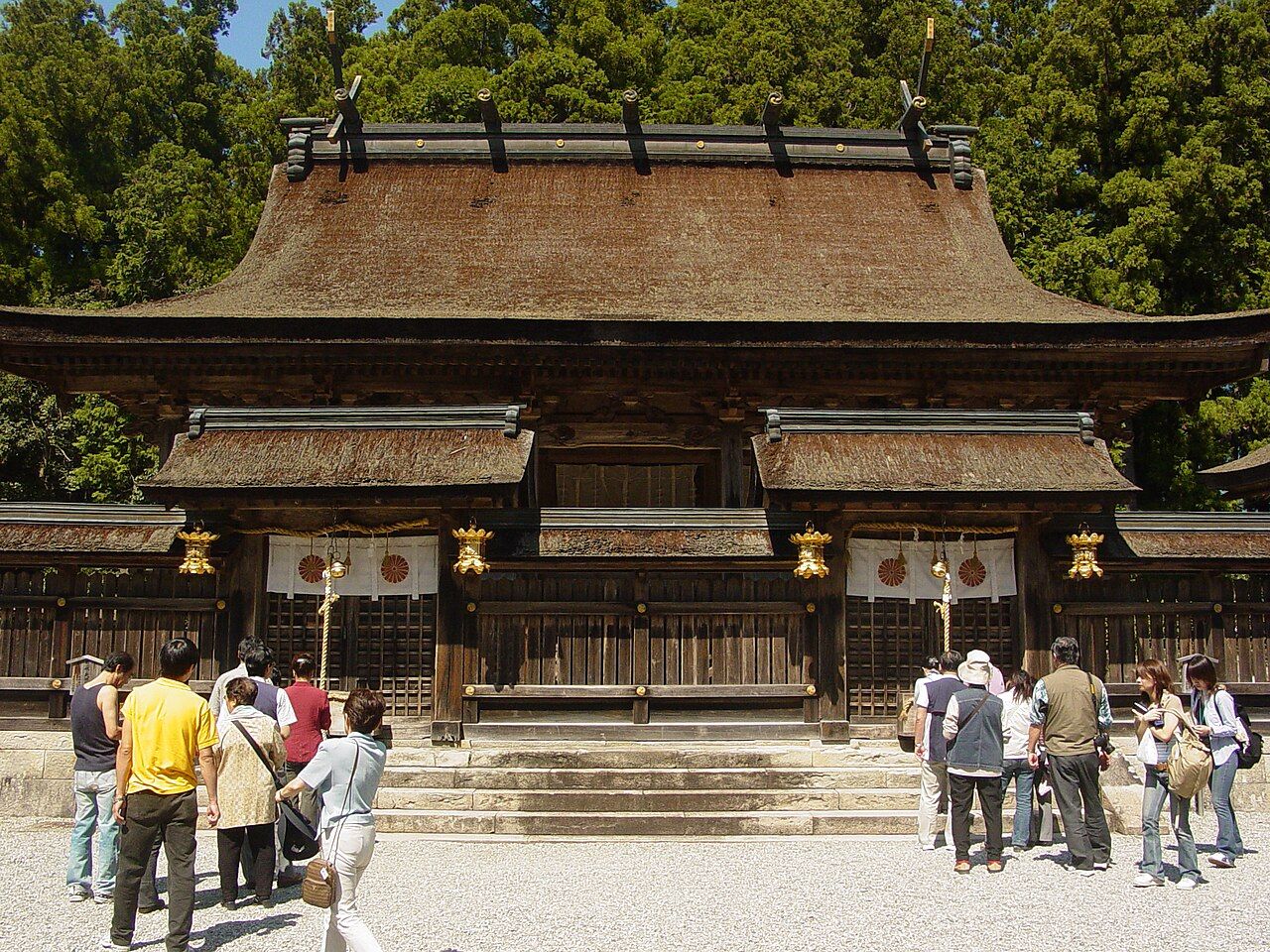
Kumano Hongu Taisha is the spiritual centre of the network. Its halls are built of dark, unpainted cypress with heavy bark roofs, and they sit at the top of a long flight of steps above the small town. Until a flood in 1889 the shrine stood on a sandbank where rivers meet, a site called Oyunohara, which you can still walk to in a few minutes; an enormous torii gate now stands at its edge.
credit
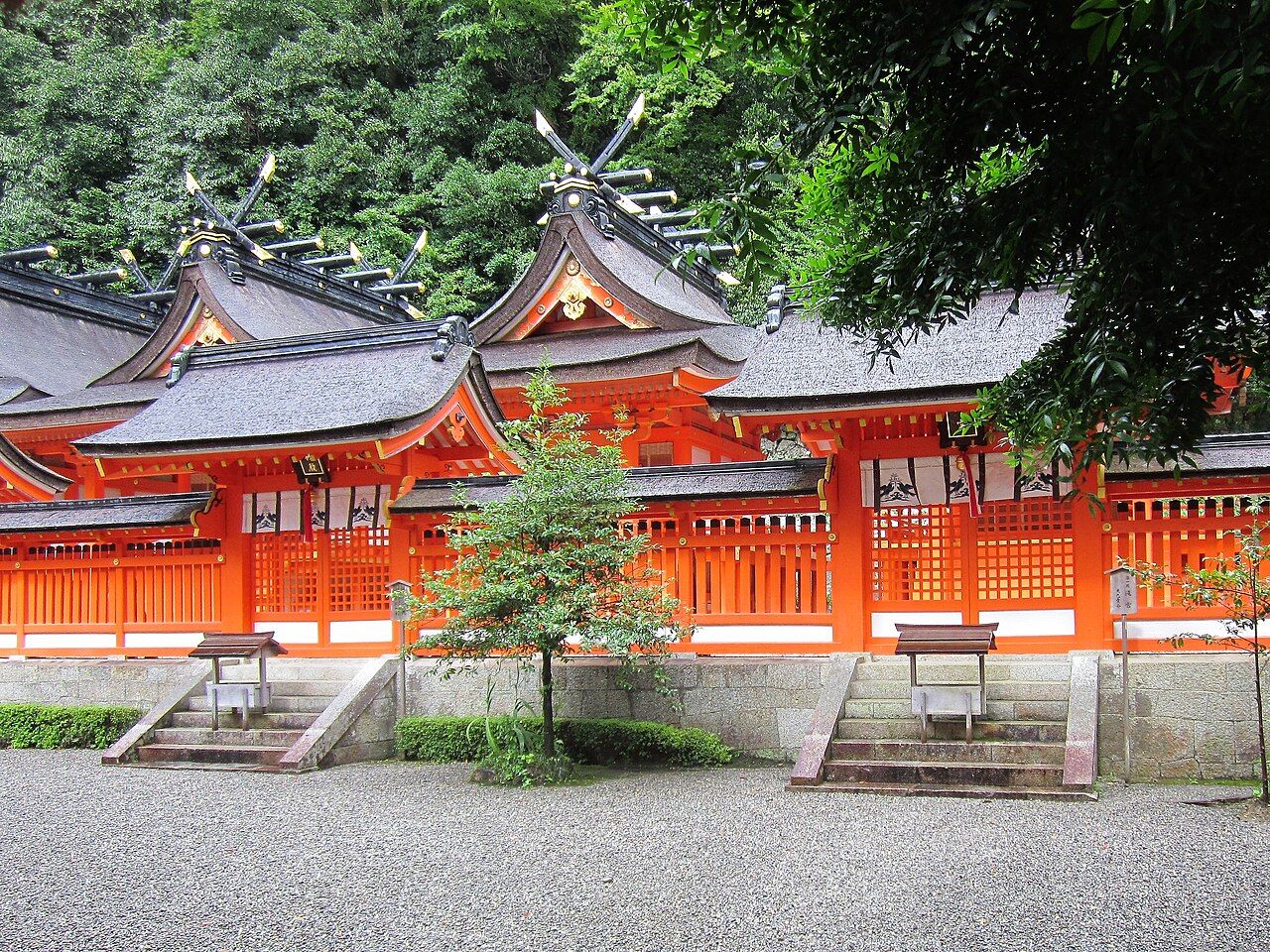
Tim Notari from Tanabe-Shi Wakayama-Ken, Japan · CC BY-SA 2.0Kumano Hayatama Taisha sits in the coastal town of Shingu, and Kumano Nachi Taisha stands on a mountainside above the Pacific, its halls painted bright vermilion. Together the three are known as the Kumano Sanzan, and many pilgrims aim to visit all of them. From Hongu you reach Shingu by bus, and local buses climb to Nachi from the coast.
credit
Suikotei · CC BY-SA 4.0At each shrine you will see visitors bow twice, clap twice and bow once before the main hall. You do not need to be a believer to do the same, and nobody minds if you simply stand quietly. Look out for the three-legged crow, the Yatagarasu, a messenger figure that appears on charms and banners across the Kumano area.
 Next on the tag · Trip-upsMaking the journey the destination
Nachi Falls and the Daimon-zaka steps
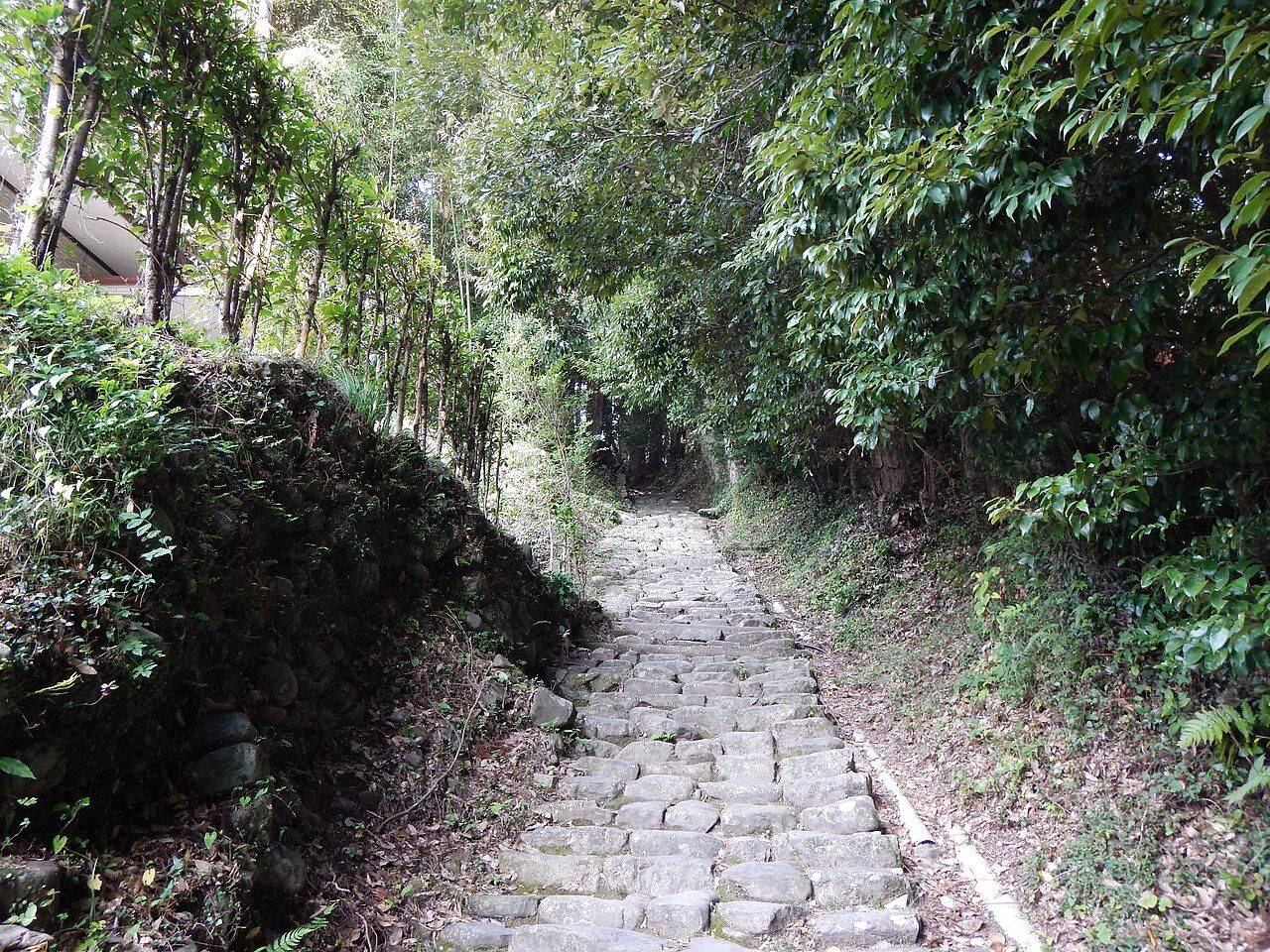
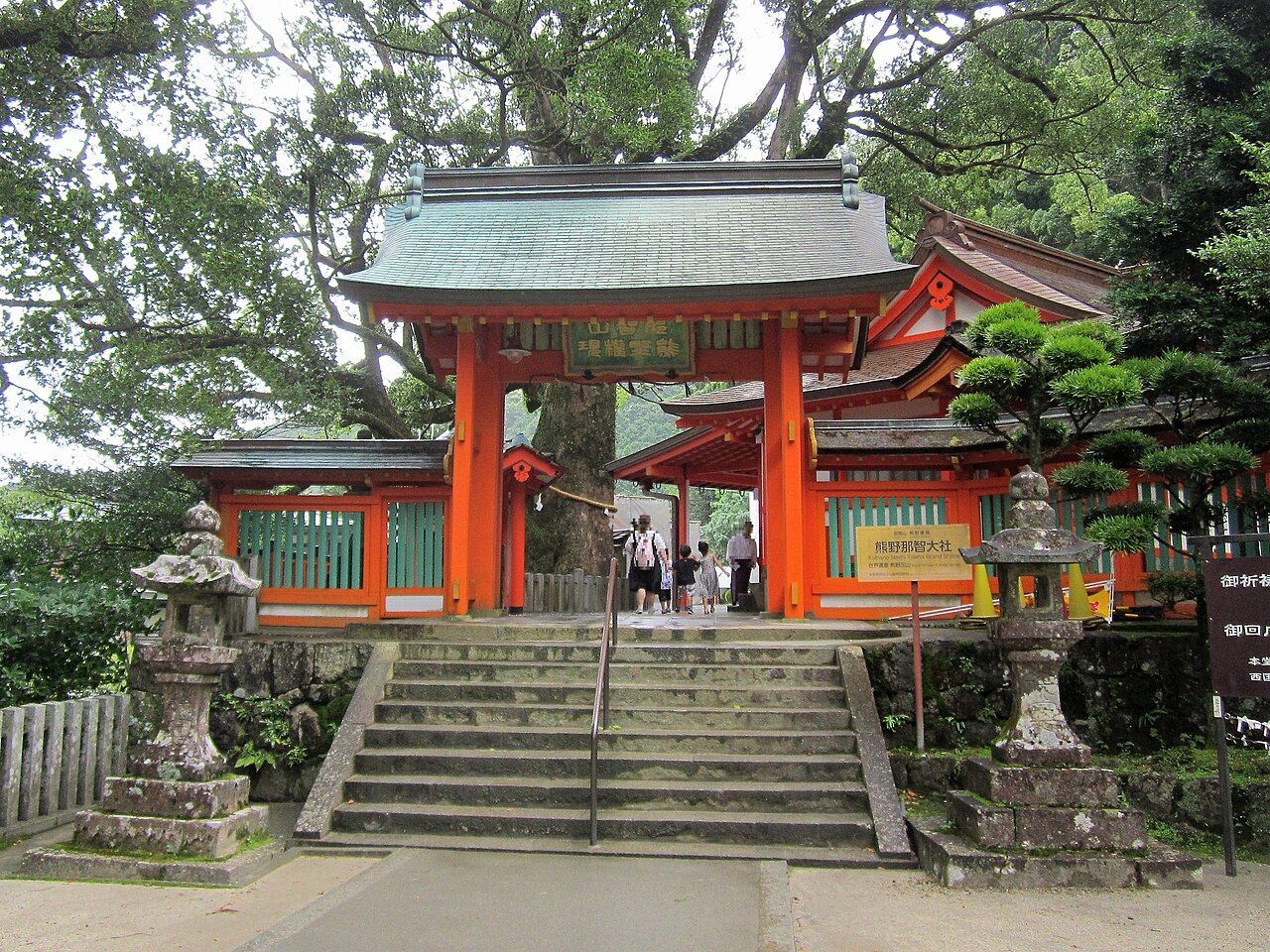
Nachi Falls drops about 133 metres in one unbroken fall, and the waterfall itself is worshipped as a deity; a small shrine sits at its foot. The classic approach to the shrine above it is the Daimon-zaka, a stone staircase that climbs through very old cedars from a bus stop lower down the mountain. Allow half an hour to an hour, because the stones are mossy and uneven and you will want to stop.
credit
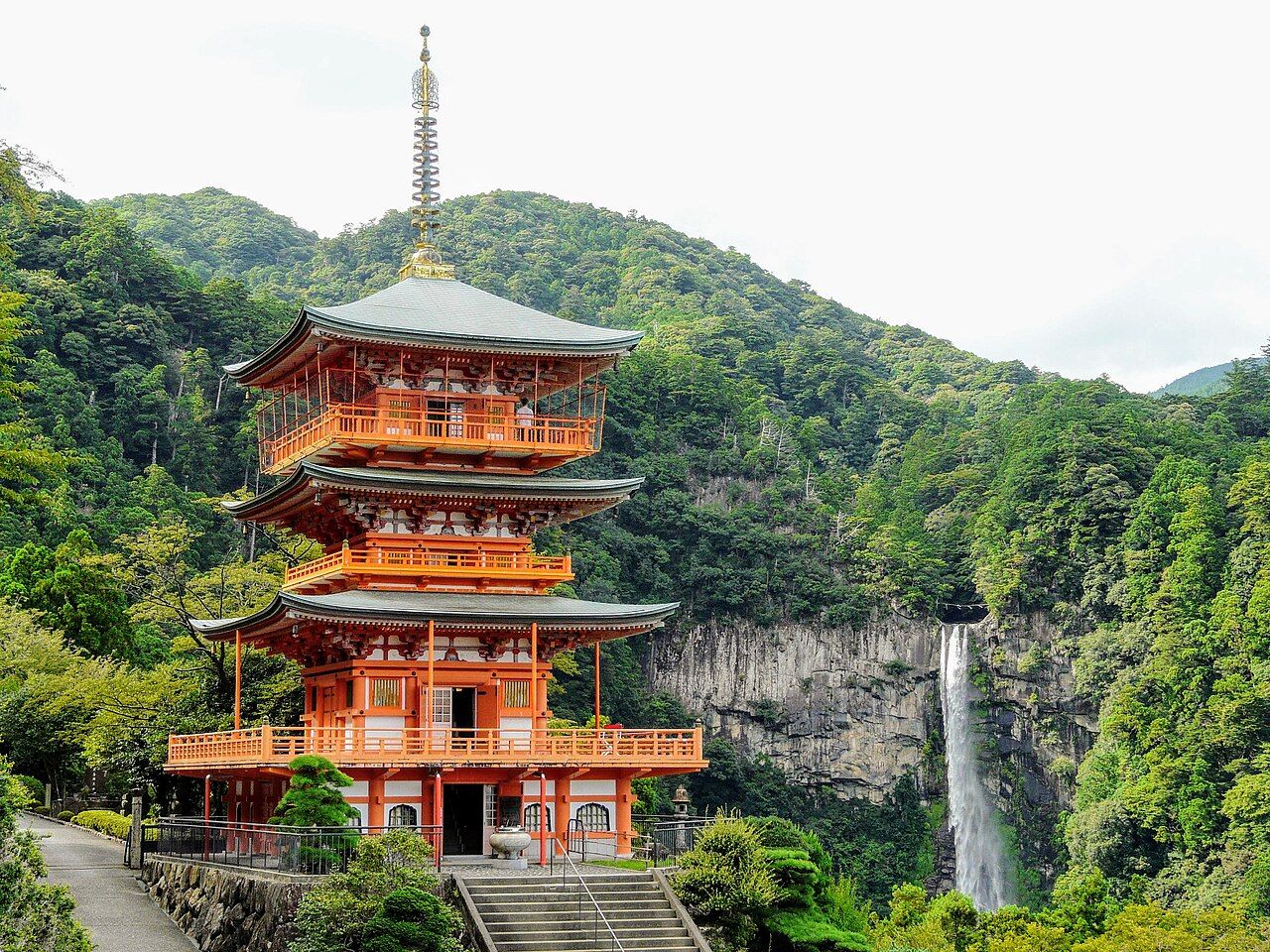
Suikotei · CC BY-SA 4.0At the top, Kumano Nachi Taisha stands beside Seiganto-ji, a Buddhist temple, a pairing that reflects the long blending of Shinto and Buddhist practice at Kumano. The three-storey vermilion pagoda with the falls behind it is the view on every poster, and it is worth the climb. Go early in the day if you can; tour coaches arrive later in the morning.
Rain, stone steps and what your legs will notice
Rain is the normal state of affairs in these mountains, not bad luck. The rainy season usually runs from about June into July, and late summer and early autumn bring typhoons that can close trails and stop buses. Even in the drier months, a wet night leaves the stones slick for hours. Shoes with a good grip matter more than heavy boots, and trekking poles help on the long descents, which tire knees more than the climbs tire lungs.
Take a proper rain jacket, a cover for your pack and a change of dry clothes in a waterproof bag. In summer the forest is hot and humid; in winter, days are short and frost can make shaded steps icy. Asian black bears live in these forests, and some walkers carry a bell, although encounters are rare. Start early so that you reach the next village well before dark, because the trail is not lit and phone signal is patchy in the deeper valleys.
Luggage, lodging and the practical side
Luggage forwarding is one of the pleasures of walking in Japan. Many inns can arrange for a bag to travel ahead to your next night's lodging, so you walk with only a day pack.
Lodging is the real constraint. Villages on the Nakahechi have only a handful of inns each, and in spring and autumn they fill weeks or months ahead. Decide your stages around the beds you can get, not the other way round. The evening bath is part of the day here: the hot spring villages of Yunomine, Kawayu and Watarase are a short bus ride from Hongu.
Decide your stages around the beds you can get, not the other way round.
Vegetarians should say so when booking, in writing. Japanese cooking leans on dashi, a stock usually made with bonito flakes, which turns up in miso soup, simmered vegetables and noodle broths that look entirely plant-based. Small rural inns can sometimes adapt a set menu with notice, but rarely on the night. The guide to eating vegetarian on the road has phrases that help.
Cash is still useful in rural Japan, and cash machines are sparse once you leave Tanabe, so pick up enough before you start. If you are arriving from a long-haul flight, give yourself a night in Tanabe first; the first days after a long flight are a poor time to tackle the opening climb. And if you want art after forest, the island of Naoshima in the Seto Inland Sea makes a fine contrast to a few days on the trail.