
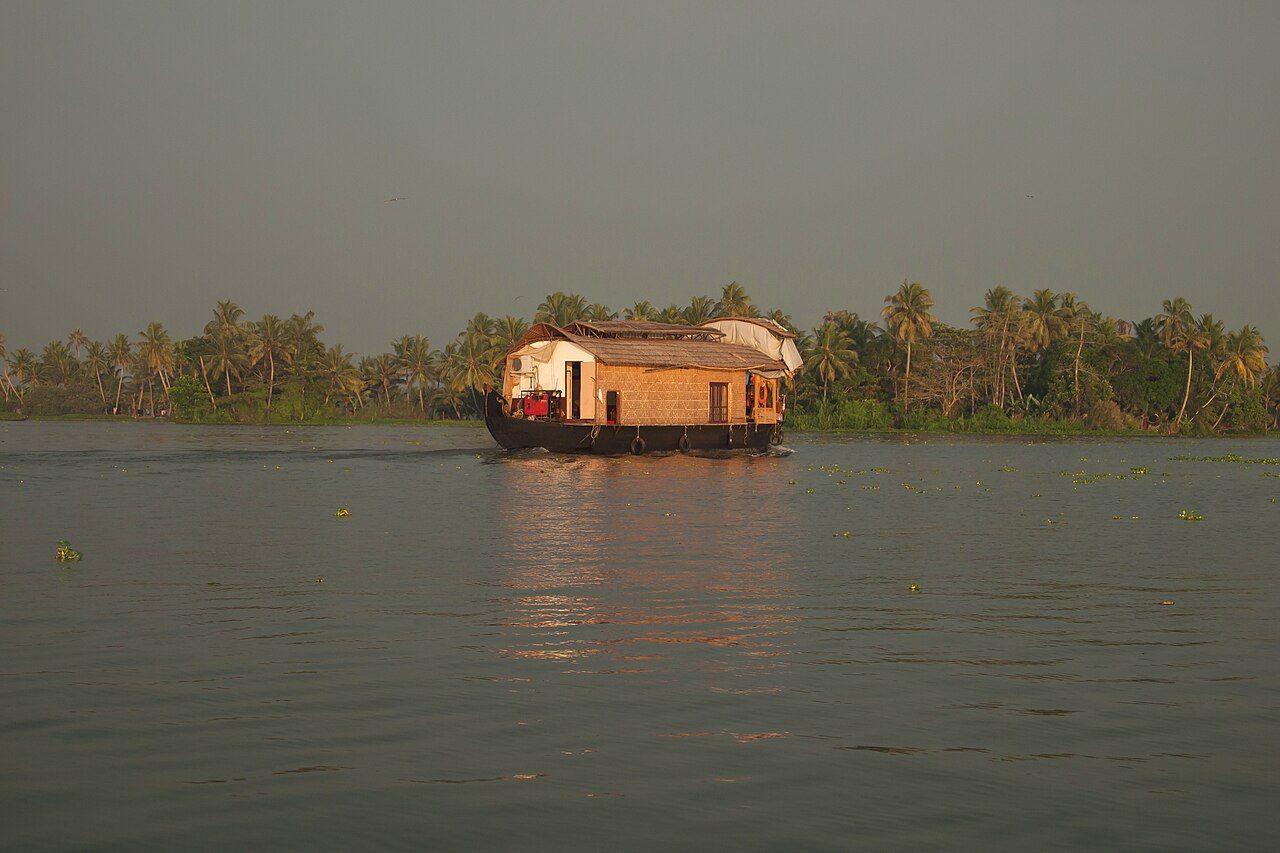
Behind the long, straight coast of Kerala lies a maze of lagoons, lakes, rivers and canals, many of them dug by hand, that runs for a great distance parallel to the Arabian Sea. These are the backwaters. Around Alappuzha, also called Alleppey, and the huge Vembanad Lake, villages sit on narrow strips of land between the water and the paddy fields, and boats are still how many people get to school, to work and to market.
Most visitors see the backwaters from a houseboat, and that can be a lovely day. But the backwaters are not a theme park, and some of the best views cost almost nothing: a seat on a public ferry, a slow canoe through a canal too narrow for anything bigger, a walk along an embankment at dusk.
Alappuzha and the public ferries
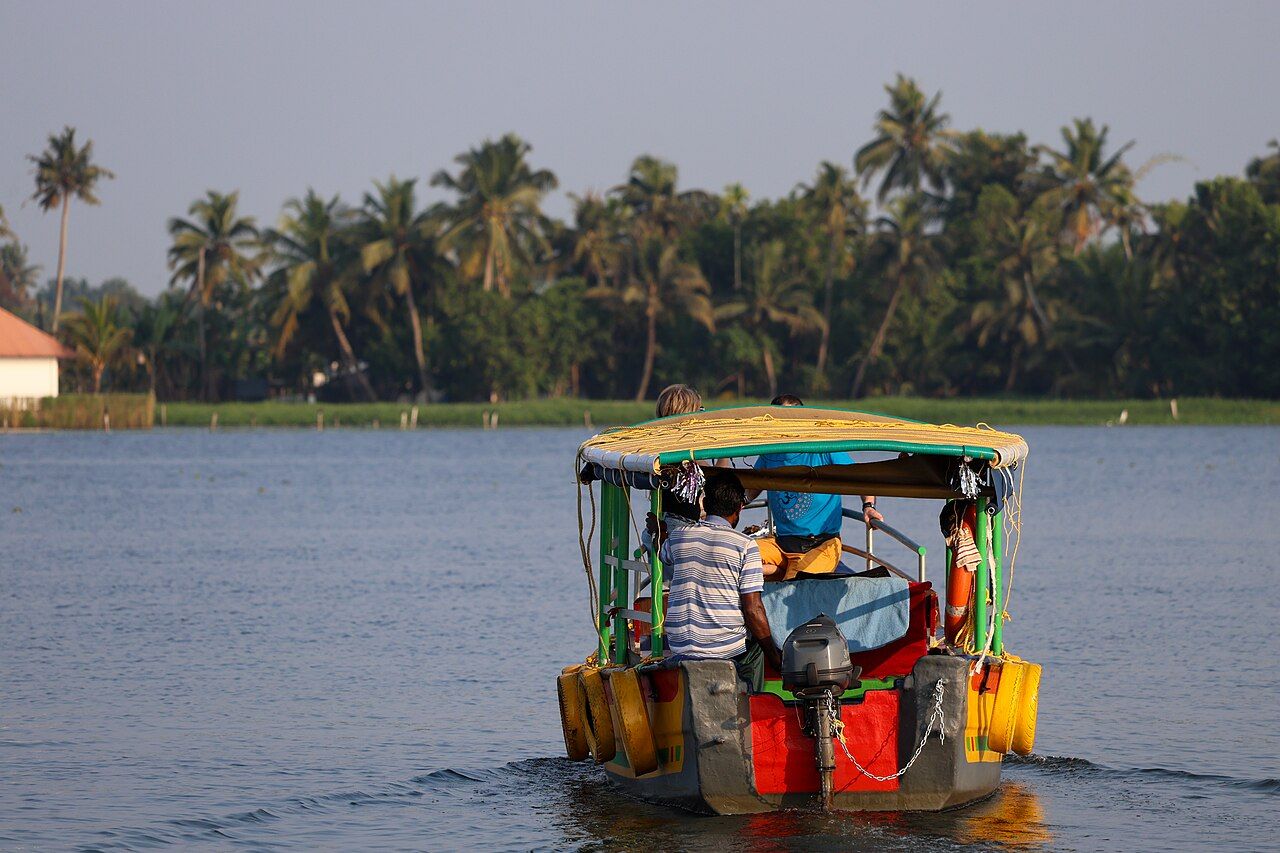
Alappuzha is a busy town built around canals, with a long beach and an old pier on its seaward side. It is the main base for backwater trips, and its boat jetty, near the town centre, is where the state water transport ferries leave for villages across the lakes. These are plain, sturdy passenger boats used by local people, with wooden benches and open sides, and they stop at small landings along the way.
The best-known route runs between Alappuzha and Kottayam, a crossing of a few hours across Vembanad Lake and along canals lined with coconut palms, rice fields and churches. Shorter routes go out to nearby villages and back. Timetables change and services can be cut or altered, so ask at the jetty the day before and arrive early; seats on the side facing away from the sun are worth having.
credit
Ganesh Mohan T · CC BY-SA 4.0On a ferry you see the backwaters as a place where people live: women washing pots at the water's edge, children in uniforms boarding with satchels, men loading sacks of rice, ducks herded along the canals. Be discreet with your camera and ask before photographing anyone up close.
Houseboats, in general terms
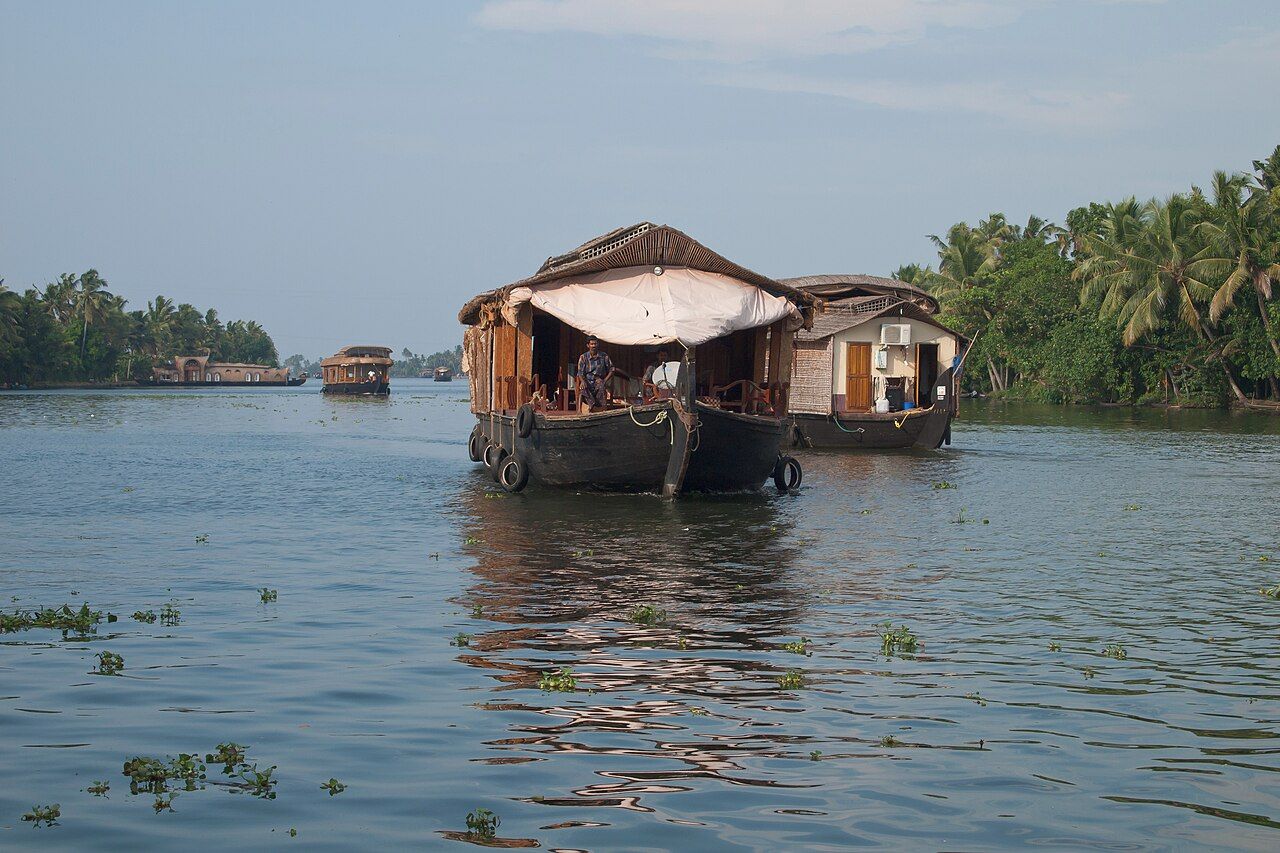
The houseboats, known as kettuvallam, are modelled on the long wooden barges that once carried rice and spices along these waterways, roofed with woven palm and bamboo. Today hundreds of them work out of Alappuzha and the surrounding area, ranging from simple boats with one bedroom to large boats with air-conditioning. A typical trip is a day cruise or an overnight stay with meals cooked on board.
Some things are worth knowing before you book. Houseboats generally stop cruising and moor up in the evening, so an overnight trip involves fewer hours on the move than you might expect. The main channels near Alappuzha can be crowded with other boats in the high season. Ask what route the boat will take, how many hours it will actually travel, whether the price includes meals, and whether the engine or generator will run at night. Look at the boat before you pay, and pay a deposit rather than the whole amount in advance.
credit
Vyacheslav Argenberg · CC BY 4.0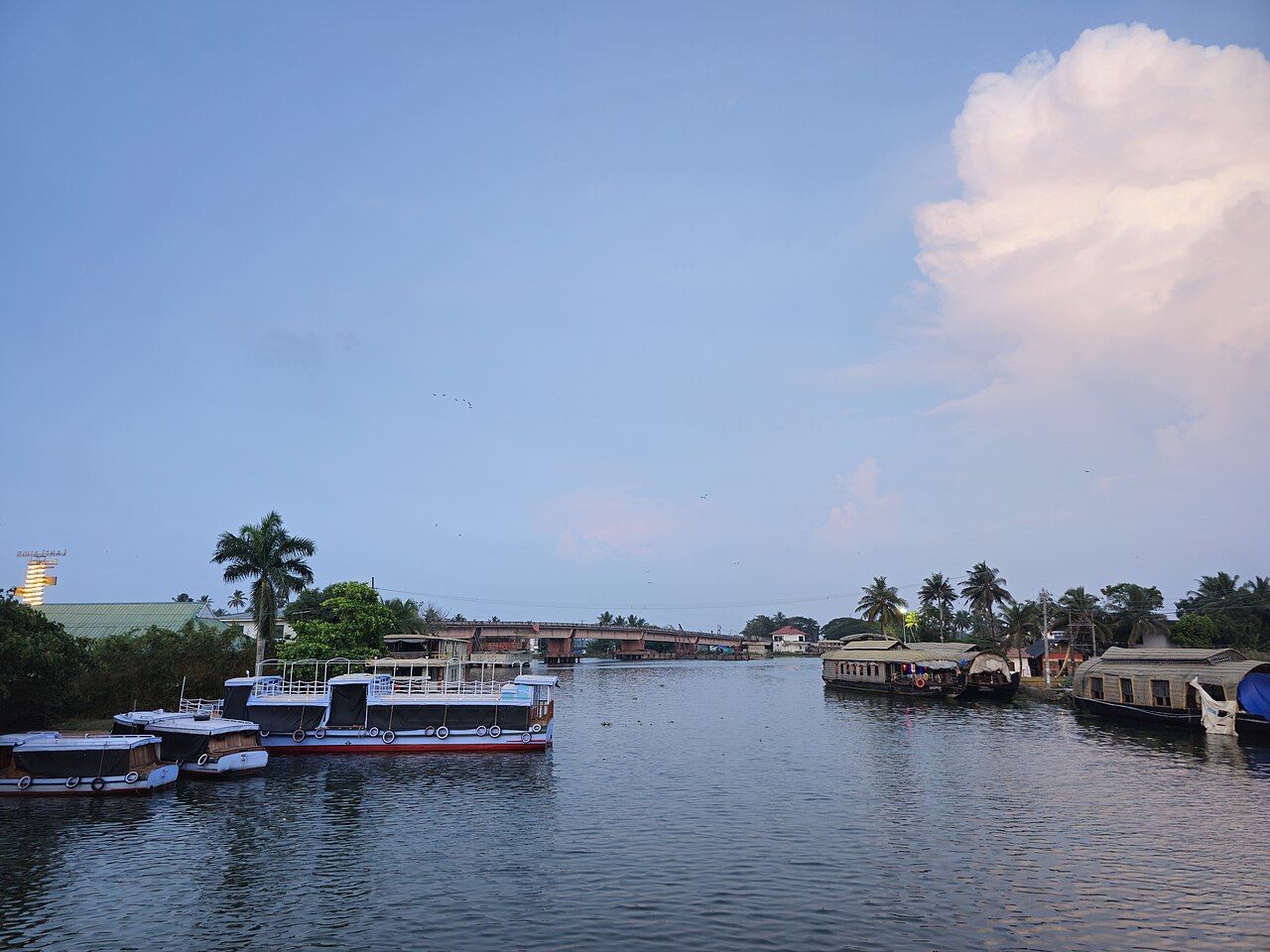
credit
Ganesh Mohan T · CC BY-SA 4.0Large boats cannot enter the narrowest canals. For those, look for a small country canoe or shallow motor boat, often paddled or poled, which slips under footbridges and past gardens for a few hours. It is quieter, closer to village life and better for spotting kingfishers, egrets and cormorants.
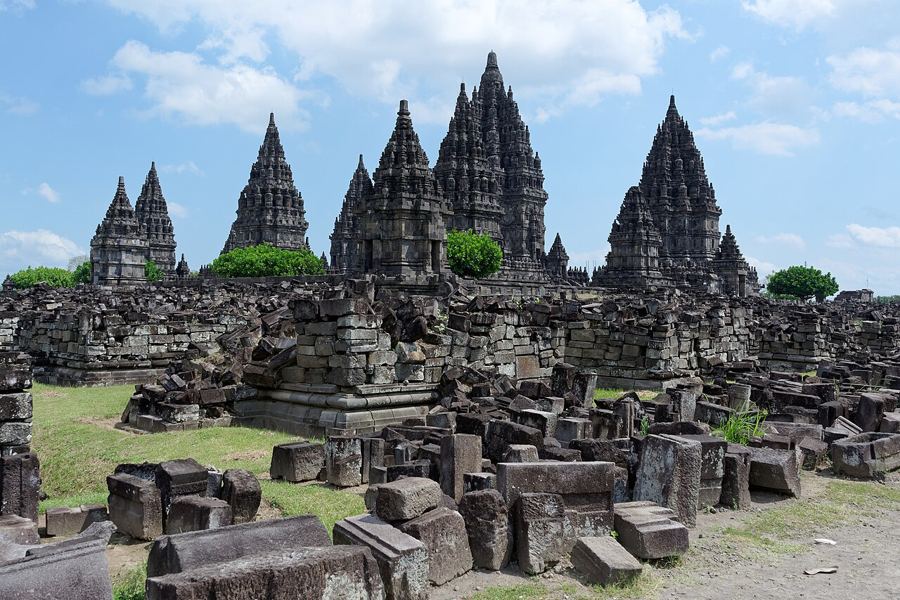 Next on the tag · AsiaYogyakarta, Borobudur and Prambanan
Kuttanad, Vembanad and Kumarakom
The low-lying land south and east of Alappuzha is Kuttanad, one of the few places in the world where rice is farmed below sea level, in fields protected by dykes and drained by pumps. From the water you look down on the paddy, which is an odd and memorable sight. The landscape changes through the year with the planting and harvest.
Vembanad Lake is the largest lake in Kerala and the hub of the whole system. On its eastern shore, Kumarakom is a quieter base than Alappuzha, with a bird sanctuary on the lakeside that is best visited early in the morning, when herons, egrets and migrant species are most active in the cooler months. It has a resort feel and fewer cheap options, but you can visit on a day trip from Kottayam or by ferry.
Whichever base you choose, give yourself at least two nights. The backwaters reward idle hours: a morning on the water, a long lunch, an afternoon walk along a bund between the fields, a sunset from the shore.
The backwaters reward idle hours, not a tight schedule.
The backwaters reward idle hours, not a tight schedule. If that suits you, the thinking behind travelling more slowly fits Kerala especially well.
Fort Kochi, the other end of the trip
Most journeys start or finish in Kochi, a port city spread over islands and peninsulas. Fort Kochi, on its seaward side, has a long colonial history: Portuguese, Dutch and British traders all left their mark. The cantilevered Chinese fishing nets along the shore are lowered and raised by teams of fishermen, and the waterfront is busiest at sunset. St Francis Church, one of the oldest European churches in India, is where Vasco da Gama was first buried before his remains were taken back to Portugal.
Next door, Mattancherry has spice warehouses, the Mattancherry Palace with its murals, and the area known as Jew Town, where the Paradesi Synagogue still stands. The synagogue has limited opening hours and closes on certain days. Public ferries link Fort Kochi with Ernakulam on the mainland and are the pleasant way to cross. Every couple of years the Kochi-Muziris Biennale brings contemporary art to old warehouses and halls around Fort Kochi and Mattancherry.
Monsoon timing and eating well
Kerala's southwest monsoon usually arrives around the start of June and brings heavy rain through the summer; a second, lighter wet season comes in October and November. The monsoon is green and dramatic, and some travellers come for it, but boats may be cancelled in storms and floods are possible. December to February is dry, warm and the most comfortable time, and also the busiest. From March to May the heat and humidity build steadily.
Vegetarians eat very well here. Many restaurants serve only vegetarian food, and a sadya, a feast served on a banana leaf, is a parade of vegetable curries, pickles and rice, finished with a sweet payasam. Breakfasts of appam with vegetable stew, or puttu with black chickpea curry, are worth seeking out. Coconut appears in almost everything, and on the backwaters fish is the default, so tell houseboat crews and homestays in advance if you do not eat it. The notes on eating vegetarian on the road help with phrases.
Carry insect repellent for evenings by the water and a small umbrella for sudden showers at any time of year. If your trip through India takes in the north as well, the river city of Varanasi is a striking contrast: another life lived on the water, in a very different key.