
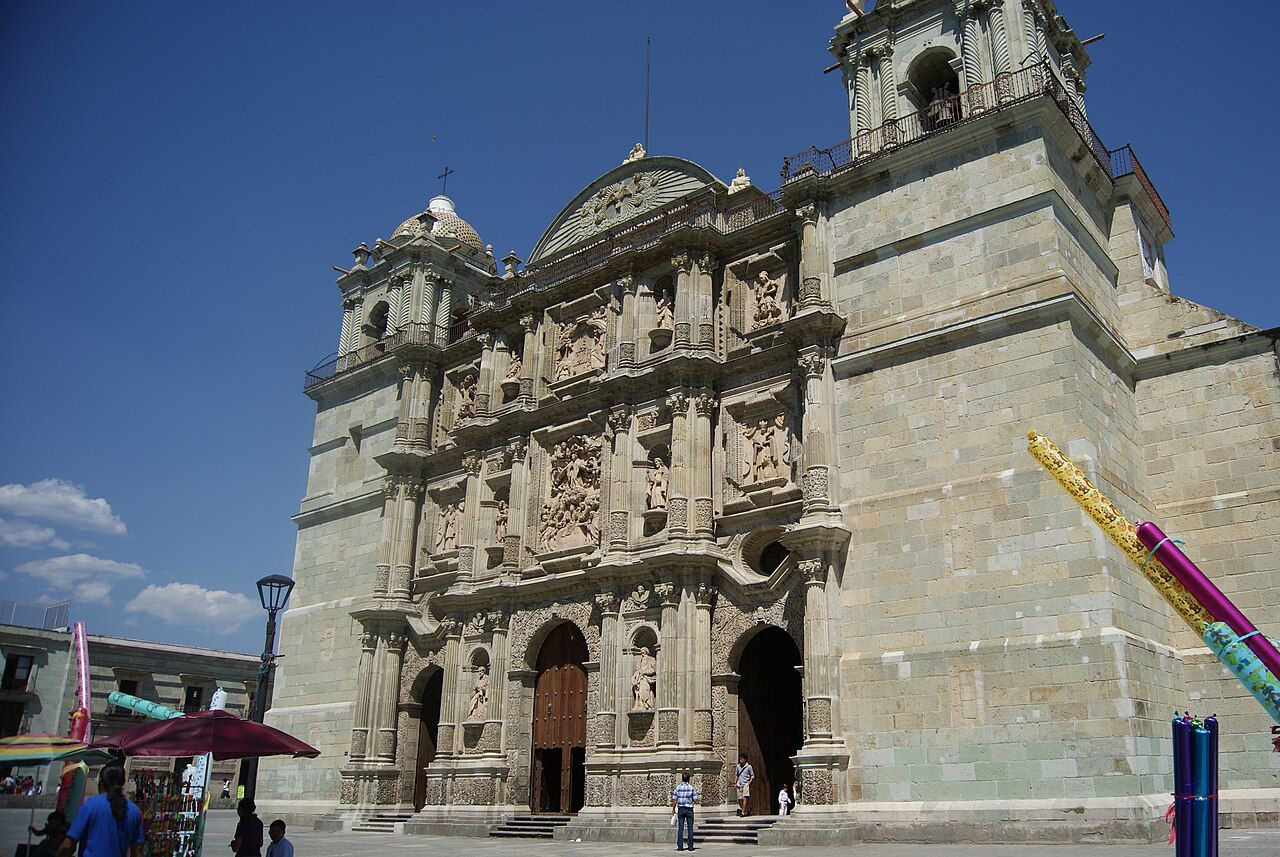
Oaxaca de Juárez, the capital of the southern Mexican state of Oaxaca, sits at around 1,550 metres in a broad valley where three arms of the Sierra Madre meet. Its centre is built of a pale green volcanic stone that glows at sunset, and together with the Zapotec ruins of Monte Albán on the hill above, it is on UNESCO's World Heritage list. The state is home to many Indigenous peoples and languages, and their crafts, markets and cooking shape everyday life in the city.
Oaxaca is the kind of place where a week passes quickly without much effort. You can see the main sights in two or three days, but the pleasure lies in repetition: the same market for breakfast, the same plaza in the evening, a different village each day.
Santo Domingo and the old centre
The Templo de Santo Domingo de Guzmán is the city's great church, a baroque building with a plain, heavy facade and an interior covered in gilded stucco. Look up just inside the entrance: the ceiling carries a painted and gilded family tree of the order's founder, a vine sprouting relatives. The former monastery next door holds the Museo de las Culturas de Oaxaca, whose collection includes the gold and carved treasures found in Tomb 7 at Monte Albán.
Behind the church, the ethnobotanical garden is planted with species from across the state, from cacti to agaves to trees used for dyes. It is usually seen on guided visits at set times. Between Santo Domingo and the zócalo, the main square, runs the pedestrian street of Macedonio Alcalá, lined with galleries and colonial houses.
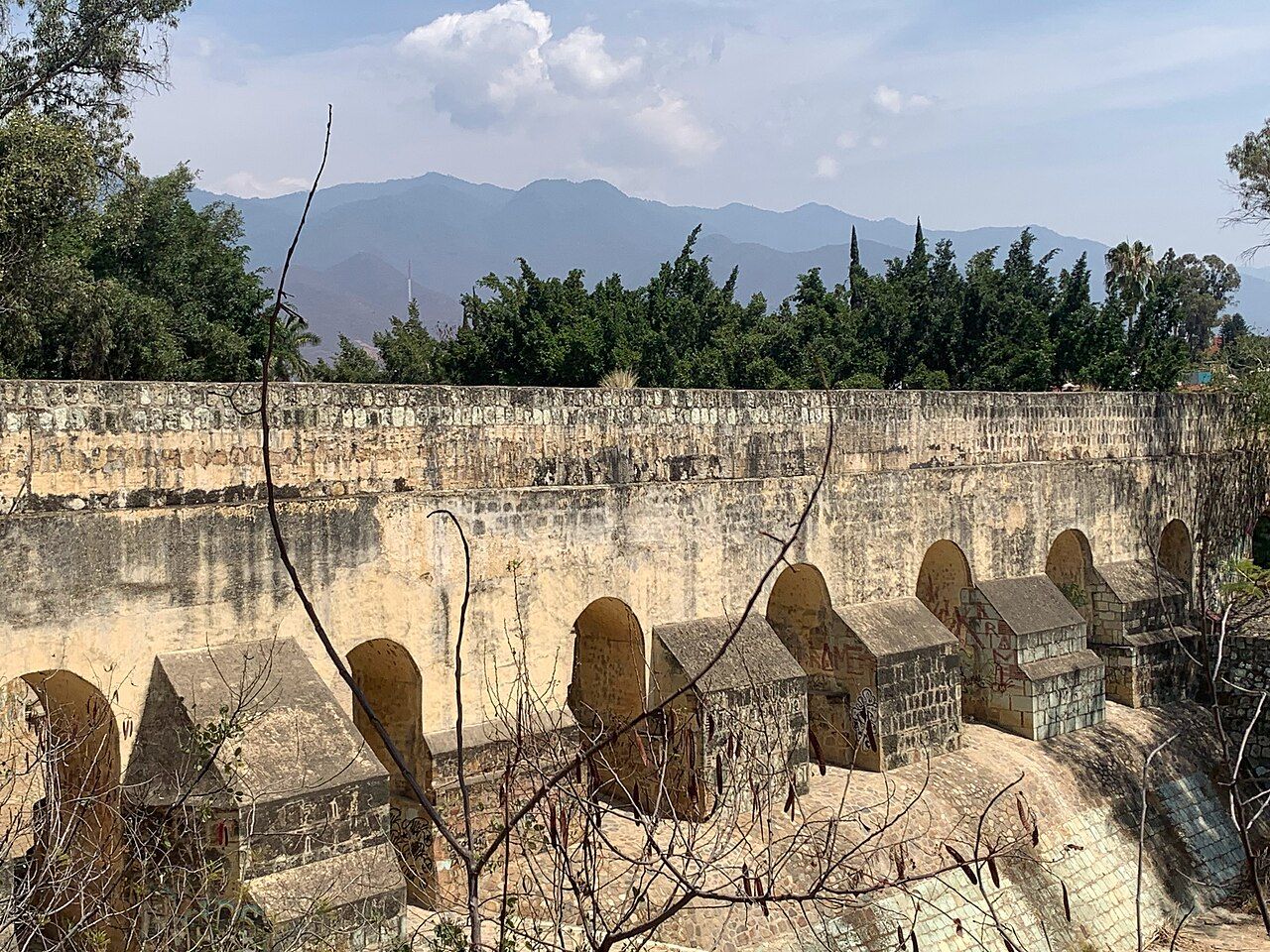
The zócalo itself, with the cathedral on one side, is the city's living room: shoe-shiners, balloon sellers, brass bands and cafés under the arcades. North of the centre, the old stone aqueduct of San Felipe runs through the Xochimilco neighbourhood, a quieter area of cobbled lanes and weavers.
credit
Apkendall · CC BY-SA 4.0Monte Albán in the early morning
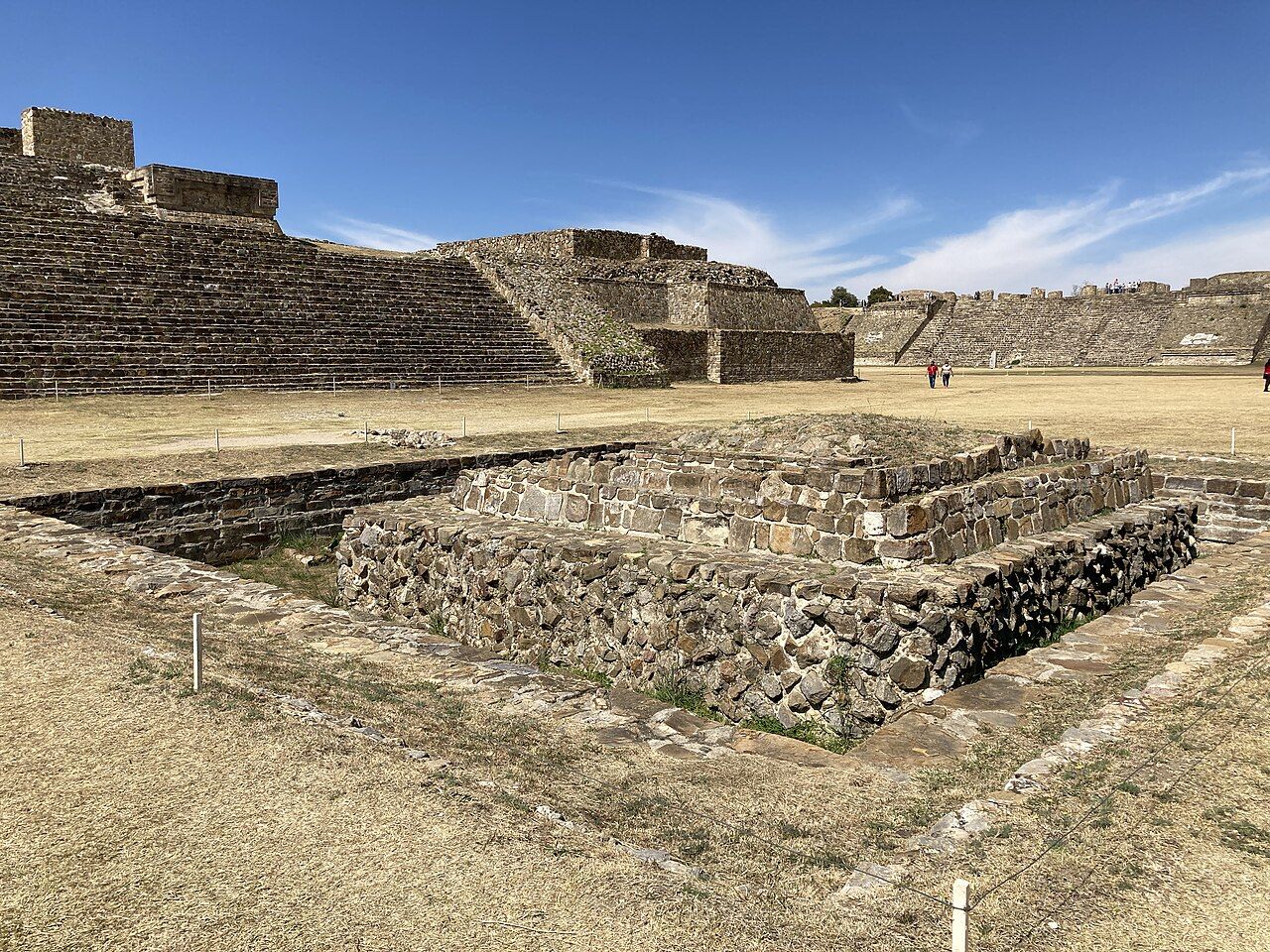
Monte Albán was the capital of the Zapotec people for well over a thousand years. Its builders levelled the top of a mountain about 400 metres above the valley floor and laid out a great plaza ringed by platforms, temples, a ball court and an observatory. The views over the three valleys are the other reason to come.
credit
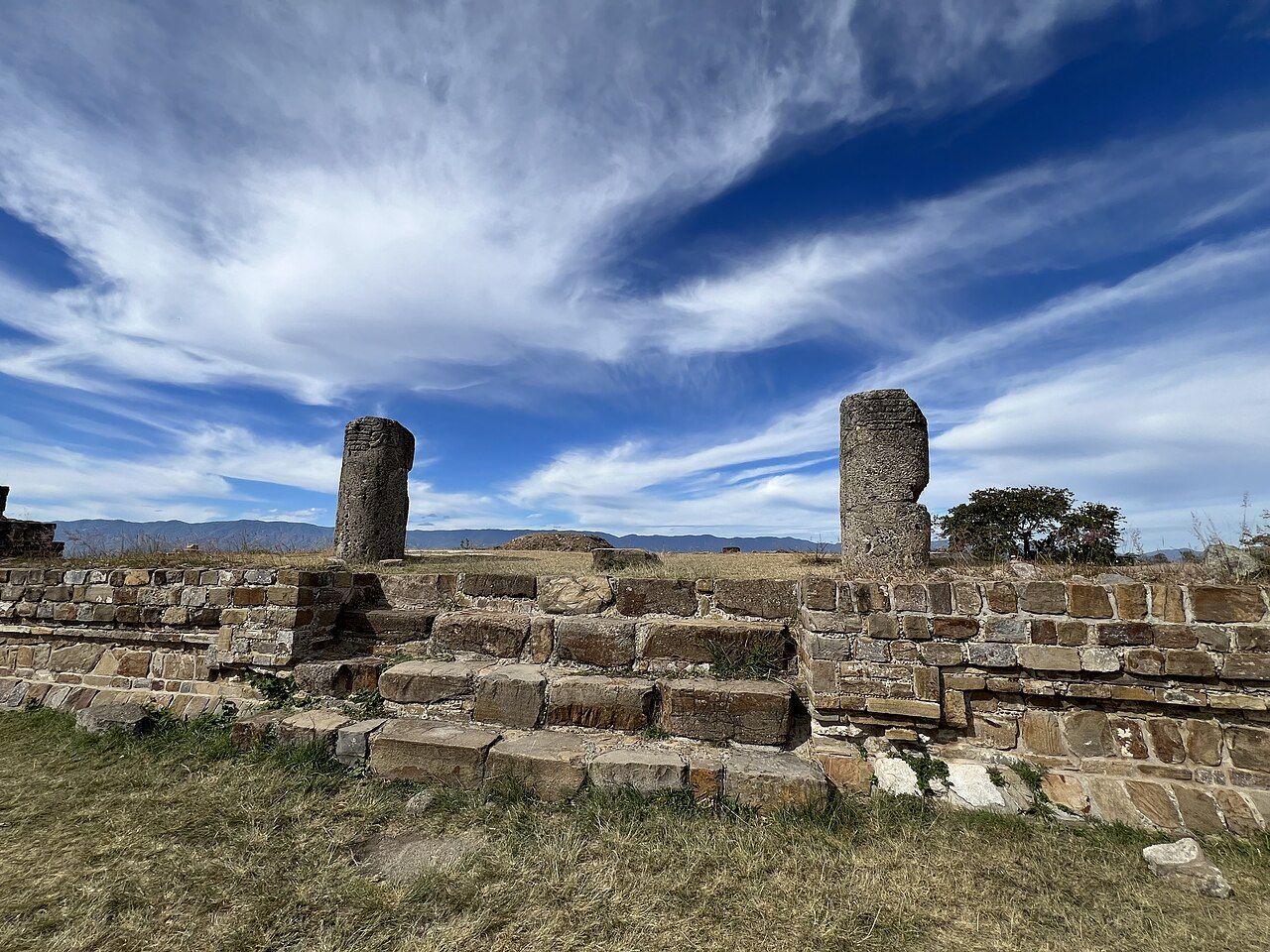
Dacuauhtli · CC BY-SA 4.0Shuttle buses run up from the city, and taxis are easy to find. Go at opening time. There is almost no shade on the plaza, the sun is fierce at this altitude, and by late morning the tour groups have arrived. Take water, a hat and sunscreen, and allow two to three hours. Look for the Danzantes, carved stone slabs of contorted human figures near the southwest corner, which are among the oldest carvings at the site.
credit
WendyAvilesR · CC BY 4.0If you want a guide, licensed guides usually wait near the entrance; agree the length and price before you start. The site museum is small but helps make sense of what you have seen.
 Next on the tag · Latin AmericaSalento and the Cocora valley
Hierve el Agua, Mitla and the valley villages
East of the city, the road through the Tlacolula valley passes several places worth a day. In Santa María del Tule an enormous Montezuma cypress, the Árbol del Tule, stands in a churchyard, with one of the widest trunks of any tree in the world. Teotitlán del Valle is known for wool rugs coloured with natural dyes, and you can visit family workshops. The ruins of Mitla are famous for walls decorated with stone mosaics in geometric patterns, unlike anything at Monte Albán.
Further on, Hierve el Agua is a cliff where mineral-rich springs have built formations that look like frozen waterfalls, with natural pools on the edge above them. It is striking, but it has been closed at times because of local disputes and to let the site recover from heavy visitor numbers.
Most villages also hold a weekly market on their own day. The Sunday market in Tlacolula is one of the biggest in the valley and draws people from many communities.
Markets and vegetarian eating
Oaxaca is one of the great food cities of Mexico. The Benito Juárez and 20 de Noviembre markets, just south of the zócalo, are good places to start, though the second has a famous corridor of grilled meat that vegetarians will want to walk through quickly. The huge Central de Abasto, west of the centre, is the region's wholesale market and an experience in itself.
Tlayudas are large, thin, crisp tortillas spread with beans and folded or topped with cabbage, salsa and quesillo, the stringy local cheese wound into balls. They are often spread first with asiento, unrefined pork lard, so ask for yours without it, and remember that beans may be cooked with lard too. Memelas, thick tortillas pinched at the edges and topped with beans, cheese and salsa, are a good breakfast. Oaxaca is famous for its moles, but many are made with meat stock and lard; ask, or look for places that make a vegetarian version.
Look out for tejate, a cool drink of maize and cacao served from painted gourds in the markets, hot chocolate made with water or milk, and mezcal, which comes from the agave fields that cover the valley. Chapulines, toasted grasshoppers with chilli and lime, are sold by the bowl. The guide to eating vegetarian on the road has phrases that help at market stalls.
Monte Albán was the capital of the Zapotec people for well over a thousand years.
Día de Muertos and the calendar
The Day of the Dead, around 31 October to 2 November, is the city's busiest time. Families build altars with marigolds, candles, bread, fruit and photographs of their dead, cemeteries fill with people keeping vigil, and processions move through the streets. It is a family and religious occasion that visitors are welcome to watch with respect: ask before photographing an altar or a grave, keep your distance from families, and do not treat a cemetery as a party. Rooms fill months ahead, so book early or come in the weeks around it, when the altars are going up.
In July, the Guelaguetza festival brings dance groups from across the state to the city. The dry season, from about October to May, brings sunny days and cool nights; from June to September, afternoons often bring heavy rain, and the hills turn green. A week here suits a slower way of travelling. If you are heading on through southern Mexico, the highland town of San Cristóbal de las Casas is a long but scenic journey to the east.