
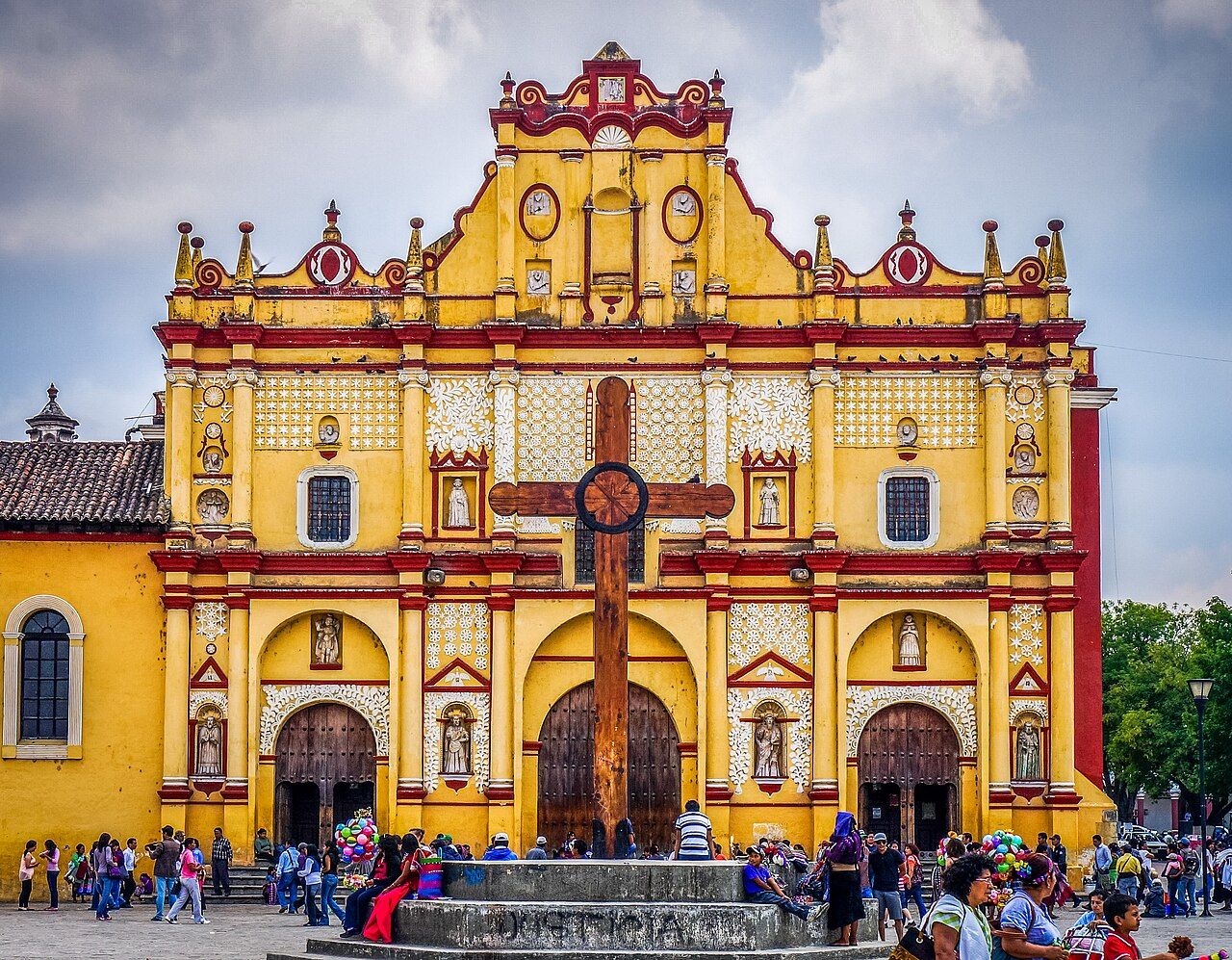
San Cristóbal de las Casas sits in a high valley of the Chiapas highlands, at more than 2,000 metres, surrounded by pine-covered hills. Founded by the Spanish in the sixteenth century, it is a town of low, brightly painted houses with tiled roofs, cobbled streets, churches on every rise, and a large population of Tzotzil and Tzeltal Maya people from the surrounding communities, who come into town to trade and sell.
It is easy to settle in for longer than planned. The town is walkable, the light is clear, and the villages nearby offer a glimpse of a very different way of life. The things that trip people up are simple: the cold, the altitude, and the rules about photographs.
Cobbled streets and cold nights
The centre is compact and partly pedestrian. Two long walking streets cross the town, lined with cafés, craft shops and old houses, and meet near the main square and cathedral. At either end, flights of steps climb to the hilltop churches of Guadalupe and San Cristóbal, which give the best views over the roofs.
The Templo de Santo Domingo, north of the centre, has a richly carved baroque facade, and the plaza around it fills with a large market of textiles and crafts made in the highland communities. Prices are open to some bargaining, but the sellers are often the weavers themselves or their families, and the work behind a good piece is considerable.
A few blocks further north, the main municipal market is where people from the surrounding communities sell vegetables, flowers, pottery, candles and household goods. It is crowded, muddy in the rain and fascinating; go in the morning, keep your bag close, and remember that the people selling here are not there to be photographed.
Because of the altitude, days can be warm and sunny while nights turn genuinely cold, especially from December to February, when temperatures can drop close to freezing. Many houses and guesthouses have no heating. Bring a warm jacket, a hat and layers, and take it easy for the first day if you have come up from the coast. The rainy season, roughly May to October, brings afternoon downpours, so a rain jacket earns its place.
San Juan Chamula and its photo rule
San Juan Chamula, a Tzotzil Maya town a short drive from San Cristóbal, governs much of its own affairs and keeps its own customs. Its whitewashed church is the reason most visitors come. Inside there are no pews: the floor is strewn with pine needles, hundreds of candles burn on the tiles, and families kneel to pray in a blend of Catholic and Maya practice that is unlike anything in most churches.
The rule is plain. Photography and filming inside the church are strictly forbidden, and the community enforces this seriously. Visitors buy an entry ticket in town before going in. Outside, many people do not want to be photographed at all, especially during religious ceremonies. Ask first, accept a no, and if in doubt keep your camera away. Go with a local guide if you can, both to understand what you are seeing and to make sure you behave as expected.
 Next on the tag · Latin AmericaMonteverde's cloud forest
The nearby town of Zinacantán is known for its embroidered clothing and its flower growing, and some families open their homes to show weaving and cooking. The same courtesy about photographs applies.
The Sumidero Canyon
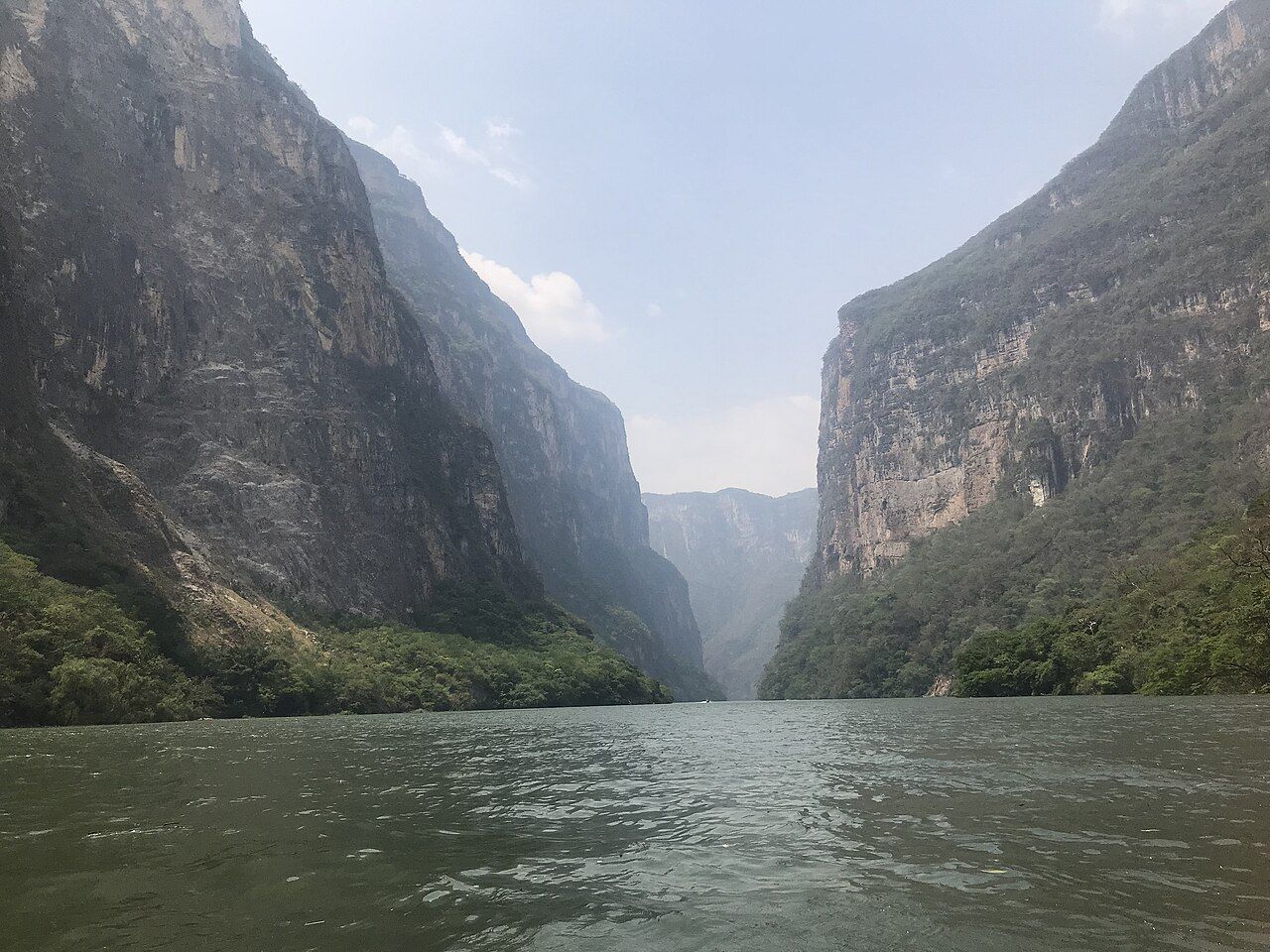
The Sumidero Canyon lies near Tuxtla Gutiérrez, the state capital, about an hour or so downhill from San Cristóbal. The Grijalva River runs between cliffs that rise to around a thousand metres at their highest, and boat trips run up the canyon from Chiapa de Corzo and nearby piers. Along the way you may see crocodiles on the banks, herons, vultures and sometimes monkeys, as well as waterfalls on the canyon walls.
The boats are fast and open; take a hat, sunscreen and something to keep spray off your camera. Chiapa de Corzo itself is a pleasant small colonial town with a large brick fountain in its main square. Viewpoints on the canyon rim are reached by road from Tuxtla and give a very different perspective from above.
credit
Christopher Javier Cuenca García · CC BY-SA 4.0Getting there and getting around
Most people fly into Tuxtla Gutiérrez and travel up by road, or arrive by long-distance bus from Oaxaca, Palenque or elsewhere in Mexico. Roads in Chiapas are mountainous and winding, and journeys can take longer than the map suggests. Road blockades by local groups happen from time to time and can delay or divert buses, so leave slack and check local news before long trips; the notes on missing a connection are useful here.
Within the town, you walk. For the villages, shared minibuses called colectivos leave from near the market, or you can join a small group trip.
Eating in the highlands
San Cristóbal is one of the easier places in Mexico to eat vegetarian. It has a large and varied community of residents from elsewhere in Mexico and abroad, and menus with plenty of meat-free dishes are common. In the market, look for tamales, though many are made with lard, and for fresh fruit, bread and atole, a warm maize drink. Chiapas grows a great deal of coffee, and you can drink it well here.
If you are travelling overland through southern Mexico, San Cristóbal pairs naturally with Oaxaca, a long journey to the west. For a different kind of highland town, with coffee farms and wax palms instead of pine forest, look further south to Salento in Colombia.