
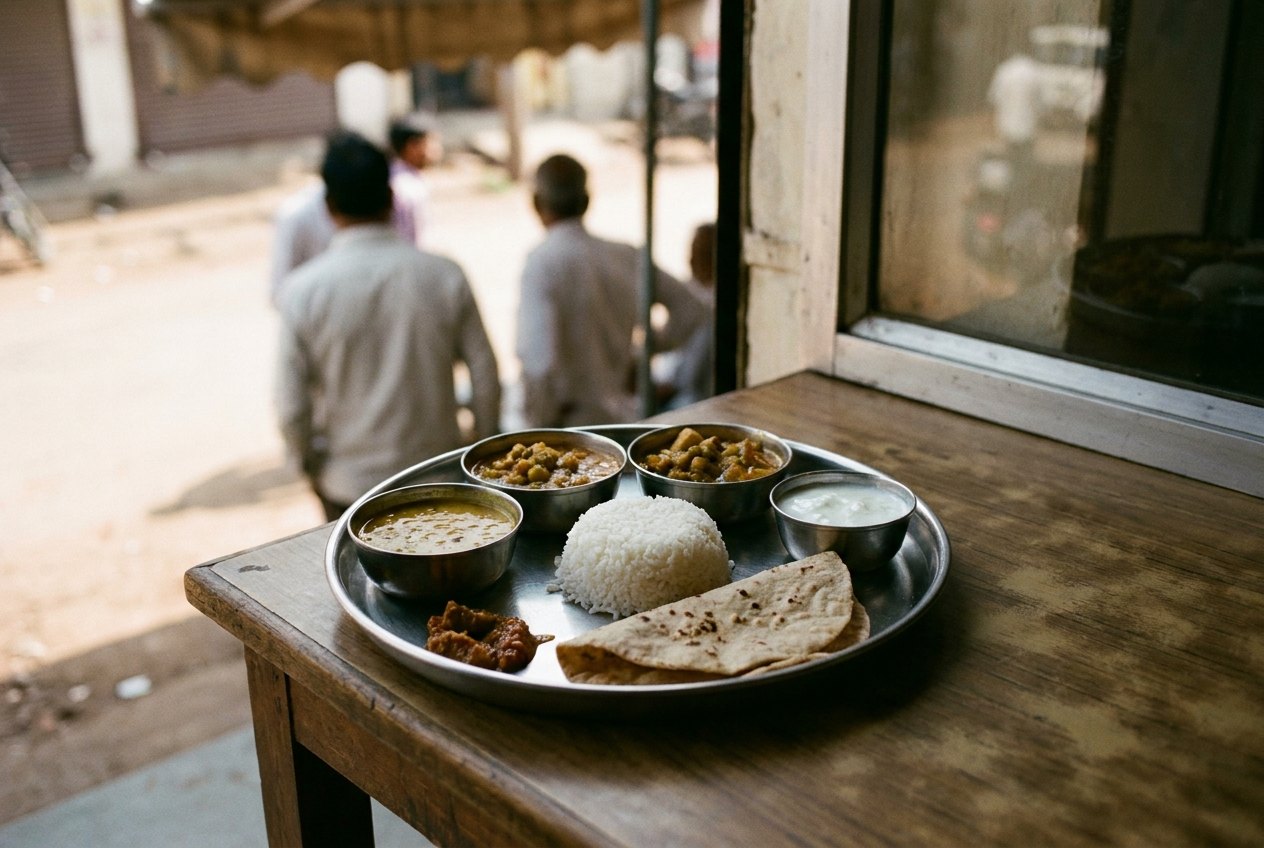
Travelling as a vegetarian is easier than it was, and in some places it is easier than at home. Parts of India have a long tradition of vegetarian cooking, Buddhist temple food exists across East Asia, and markets almost everywhere sell fruit, bread, cheese and beans. The difficulty is less about finding food than about knowing what is in it. A clear soup may be made from bones, a plate of greens may be finished with fish sauce, and a bowl of beans may have been cooked in lard.
None of this is hidden on purpose. In many kitchens these ingredients are simply the default, the way salt is. Understanding that changes how you ask.
Phrases that actually work
Saying you are vegetarian is a start, but the word does not mean the same thing everywhere. To some cooks it means no visible meat, and fish or chicken stock is fine. A more useful approach is to name what you do not eat: meat, chicken, fish, seafood, and the stocks and sauces made from them.
Write it down. A short card in the local language, ideally checked by someone who speaks it, saves you shouting across a noisy counter. Keep it on your phone as an image and on paper as a backup. Useful lines to include:
- No meat, chicken, fish or seafood, please.
- No meat stock, fish sauce, shrimp paste or lard, please.
- Eggs and milk are fine (or not, if you avoid them).
- Thank you, this is very kind.
In India the idea of pure vegetarian food is widely understood, and many places mark it clearly, which is part of why Jaipur and the south are easy places to eat. In Thailand, food described as jay follows a Buddhist tradition that excludes animal products and often also garlic and onion. In Spanish-speaking countries, saying that you eat no meat and no chicken is worth doing separately, since some people do not count chicken as meat.
Where the surprises hide
Each region has its usual suspects. Knowing them lets you ask the right question.
- Fish sauce and shrimp paste in much of Southeast Asia, in dressings, curries, dipping sauces and stir-fries.
- Dashi in Japan, the stock behind miso soup, noodle broths and many simmered dishes, usually made with dried bonito flakes.
- Lard in parts of Mexico and Central America, in refried beans, tamales and some tortillas.
- Chicken or beef stock in rice, soups and sauces across Latin America and Europe.
- Ghee in South Asia; it is clarified butter, so fine for most vegetarians but not for vegans.
- Gelatine and animal rennet in sweets and some cheeses almost everywhere.
In Japan, walking routes such as the Kumano Kodo mean eating in small guesthouses where dinner is set for the whole table, and dashi is close to universal. Telling your hosts ahead of time, in writing, gives them a chance to cook something different rather than leaving you to pick around a tray.
When you cannot be sure, choose dishes where the base is visible: rice with vegetables you watched being stir-fried, flatbreads, grilled corn, fresh fruit. And decide in advance how strict you want to be on the road. Many travellers accept some uncertainty with sauces and stocks rather than going hungry; others hold firm. Either is a reasonable choice, as long as it is yours.
 Next on the tag · Latin AmericaOaxaca for a slow week
Markets are your friend
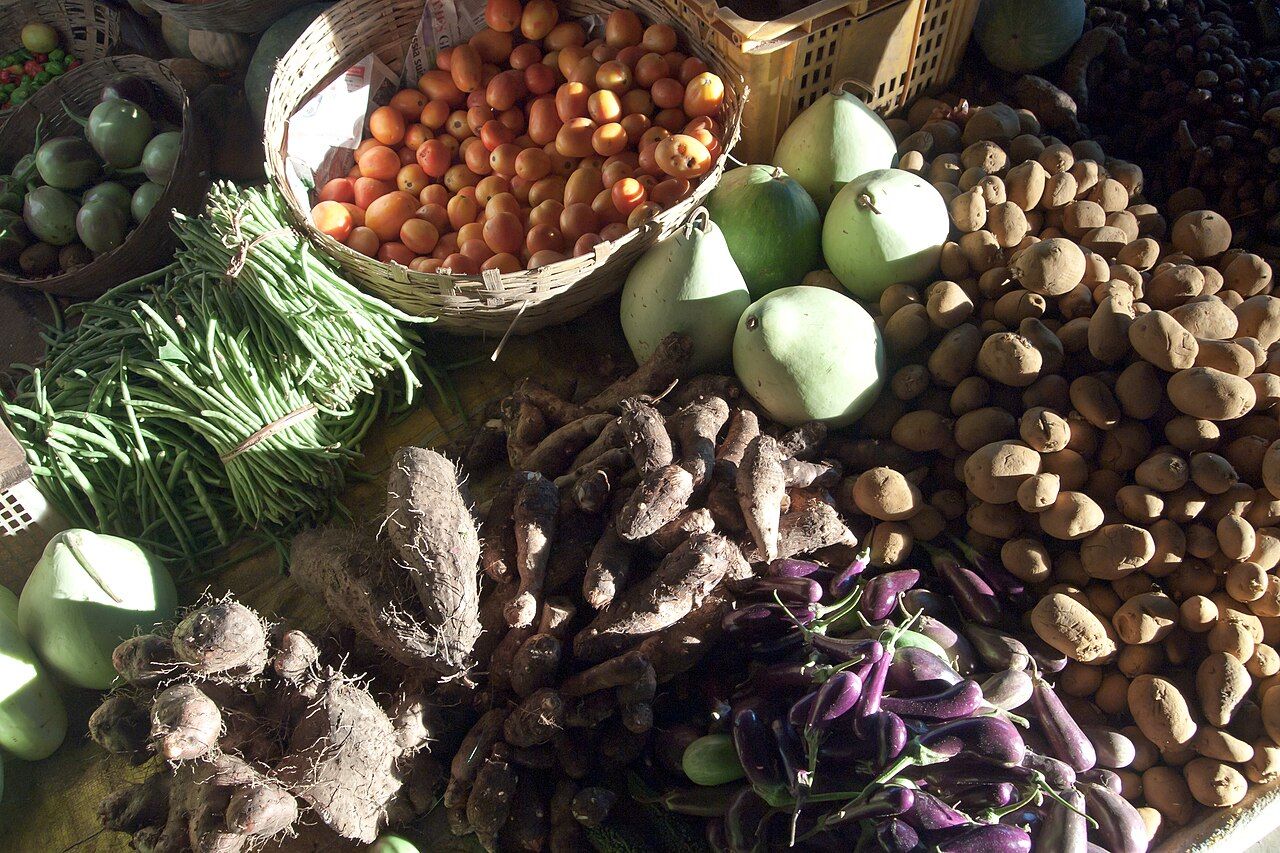
Markets are where vegetarian travel gets easy. You see every ingredient, you choose what you want, and prices are usually clear. Fruit you have never tried, bread warm from the oven, roasted nuts, fresh cheese, pickles and cooked snacks are all there. In much of Mexico a market lunch of quesadillas or tlayudas with beans and cheese is an easy meal, though it is worth asking about the lard; Oaxaca's markets are among the best places to practise.
credit
Vyacheslav Argenberg · CC BY 4.0Market stalls cooking to order also let you watch what goes in. Point, ask and smile. Wash or peel fruit where you are unsure about the water, and choose stalls that are busy, since a fast turnover means food has not sat around.
Cooking in shared kitchens
Many hostels, guesthouses and rental flats have a shared kitchen, and a few basic meals cooked there take the pressure off. A pot of rice or pasta with vegetables and a tin of beans, eggs scrambled with tomatoes and onions, or a big salad of market produce with bread and cheese will carry you for days.
Shared kitchens come with shared pans, so if strict separation matters to you, a quick wash before you start is worth the minute. Label anything you leave in the fridge with your name and the date. And look in the free shelf: travellers often leave behind oil, spices and half-used bags of lentils.
Protein on long travel days
The hardest days are transit days. Bus stations, motorway stops and airports tend to sell sweet snacks, fried pastries and sandwiches with ham, and twelve hours on bread and biscuits leaves you tired and grumpy. Pack your own.
- Nuts, seeds and peanut butter, which travel well and fill you up.
- Hard cheese, which keeps for a day or two out of the fridge in cool weather.
- Boiled eggs, if you eat them, bought or cooked the night before.
- Roasted chickpeas, dried fruit and oat bars.
- A small container of cooked beans or lentils for the first part of the day.
A spoon and a small lidded box take up almost no space and turn a market stop into a proper meal. Keep the snacks in your day bag, not the hold, since luggage can go astray; the advice in the bag that did not arrive applies to food as much as to clothes.
When it goes wrong anyway
Sooner or later you will bite into something you did not expect. It happens to everyone, and it is not a moral failing. Set the dish aside politely if you can, or eat around it, and move on. Most cooks are happy to help once they understand what you want, and a little patience and a written card get you further than frustration.
Over time you build a set of reliable dishes in each country you visit, and that set is the real tool: two or three meals you know how to order, plus a market and a kitchen when those run thin. Eating vegetarian on the road becomes less about avoiding mistakes and more about the curiosity that brought you there in the first place.