
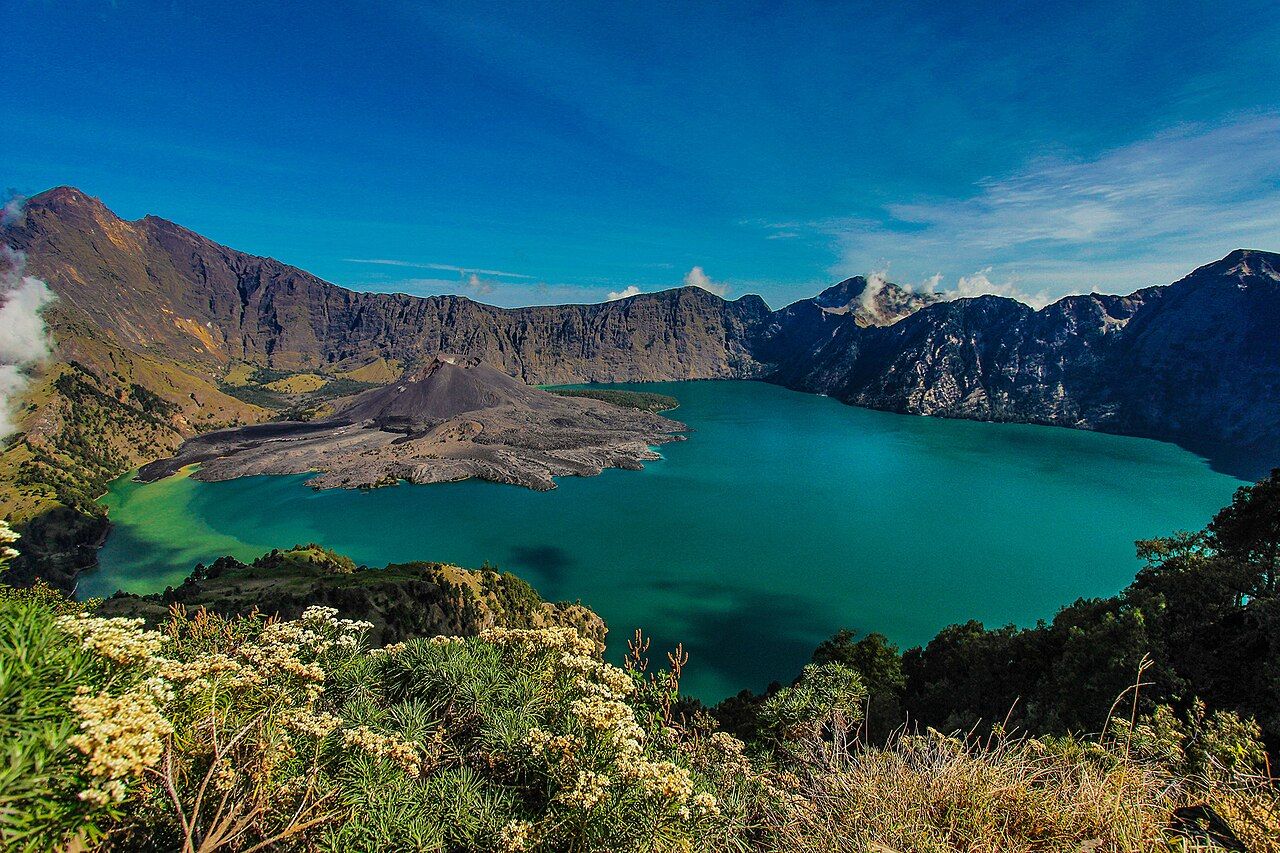
East of Bali, across the deep Lombok Strait, lies Lombok: a large island of rice terraces, tobacco fields, Sasak villages, surf beaches and, filling its northern half, the great volcano of Rinjani. Off its northwest coast sit the three Gili islands, Trawangan, Meno and Air, small flat coral islands ringed with white sand, where there are no cars or motorbikes and you get around on foot, by bicycle or by horse cart.
The Gilis are easy to love and easy to reach, which is part of the problem: the boats that bring you there are the riskiest part of the trip. Plan the crossing with care, then slow right down.
Getting there, and the fast boats
Fast boats run from several ports on Bali to the Gilis and to Lombok, crossing the strait in a couple of hours when conditions are good. The strait is open water with strong currents, and it can be rough at any time of year, especially when big swells roll in from the Indian Ocean. Boats vary a great deal in quality, and accidents have happened.
Before you board, look at the boat and the sea. Check that there are enough life jackets for everyone and that you know where they are; avoid a boat that is clearly overloaded; and sit where you could get out quickly rather than deep inside a closed cabin. Keep your passport, phone and money in a dry bag on your body, not in the luggage pile. If the weather is bad and departures are going ahead anyway, it is fine to wait a day.
Slower public ferries cross from Padang Bai in Bali to Lembar in Lombok, taking several hours. From Lombok itself, small public boats and shuttle boats cross to the Gilis from Bangsal and nearby harbours in well under an hour. Lombok also has an international airport in the south of the island. If you are juggling boats and flights on the same day, read the notes on missing a connection first, and keep essentials in your day bag in case your luggage goes astray; the advice on the bag that did not arrive applies to boats too.
The three Gilis
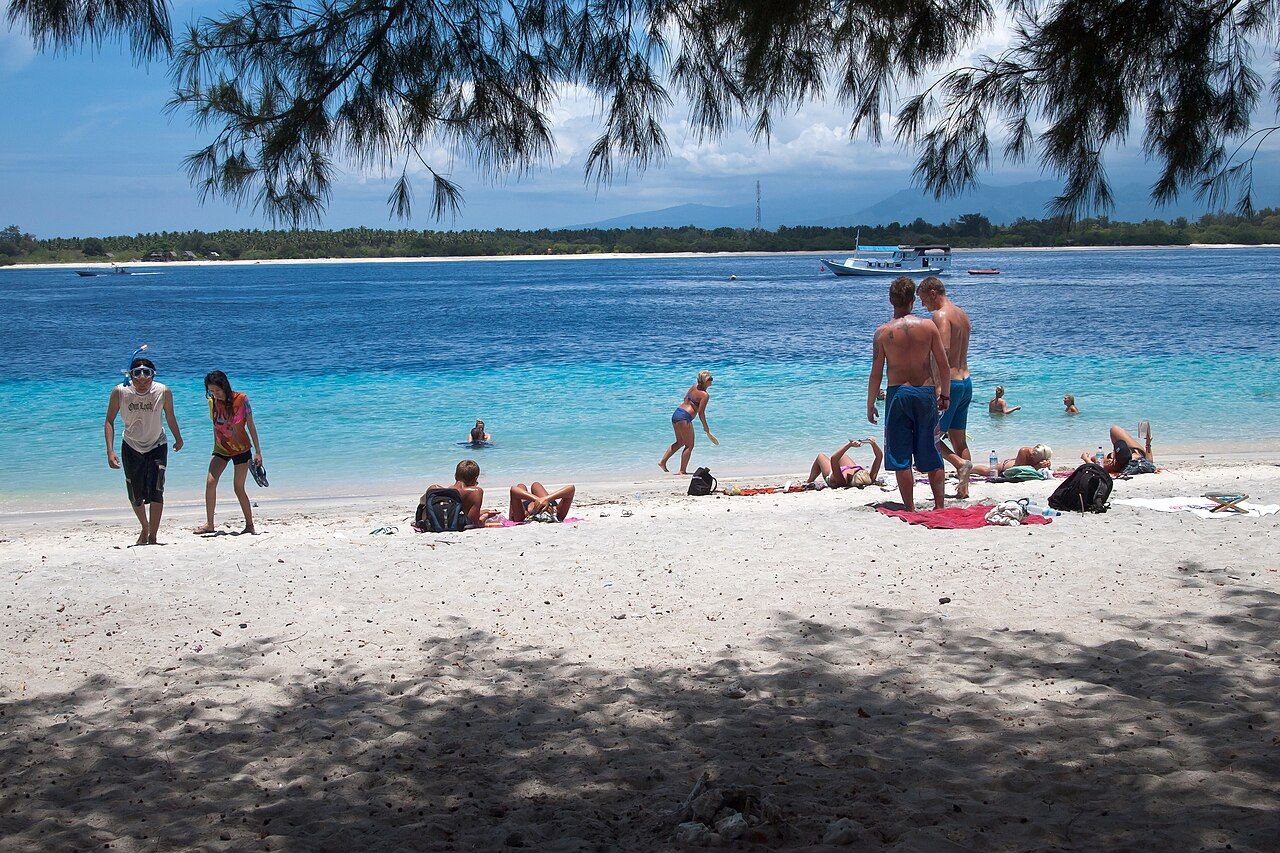
Gili Trawangan is the largest and liveliest, with a busy strip of bars and dive shops on its east coast and quieter beaches around the back. Gili Meno, the smallest, is the quietest, with a salt lake in the middle and long stretches of empty sand. Gili Air sits in between, with a lived-in village feel and plenty of places to eat. You can hop between them by public boat.
credit
Vyacheslav Argenberg · CC BY 4.0There is no motor traffic, but there are horse-drawn carts called cidomo. Animal welfare groups have raised concerns about how the horses are kept and worked, and many visitors choose to walk or cycle instead. Bicycles are easy to rent, though sandy tracks make some stretches hard going.
 Next on the tag · AsiaKerala's backwaters by public ferry
Snorkelling with turtles
The reefs around the Gilis are home to green and hawksbill turtles, and seeing them while snorkelling just offshore is common. Give them space: do not touch, chase or stand on the coral, and never feed them. Use a reef-safe sunscreen, or cover up with a rash vest instead.
Currents run strongly through the channels between the islands and can carry a swimmer away surprisingly fast. Boat trips that visit several snorkelling spots are widely available.
Lombok's south coast
The south of Lombok is a different world from the Gilis: a dry, hilly coast of wide bays, headlands and surf breaks around the town of Kuta, Lombok, not to be confused with Kuta in Bali. Beaches such as Tanjung Aan and Selong Belanak are good for swimming or learning to surf in the right conditions, while others have powerful waves and rips best left to experienced surfers. Development has grown quickly here, but many coves are still quiet.
You will need your own transport, a driver or a scooter, to explore. Scooter accidents are common, roads can be steep and sandy, and you should only ride if you are licensed and insured to do so.
Rinjani, in general terms
Mount Rinjani, at more than 3,700 metres, is the second-highest volcano in Indonesia. Its huge caldera holds Segara Anak, a crater lake with a young volcanic cone rising from its waters. Treks usually take two to four days from the villages of Senaru or Sembalun and involve steep, loose ground, cold nights and a very early summit push.
The mountain lies within a national park. Trekking requires registration and a licensed guide, the park closes the trails for part of the wet season each year, and rules change after incidents, which do happen. Treat it as a serious mountain climb, choose a guide carefully on the basis of safety rather than price.
Culture, seasons and eating
Lombok is predominantly Muslim, and so are most of the people who live on the Gilis. Away from the beach, cover your shoulders and knees, and during Ramadan be considerate about eating and drinking in public in villages. Expect to hear the call to prayer, which carries far over the water at dawn.
The dry season, roughly May to September, brings the most reliable weather; the wet season brings heavy showers and occasional storms that can cancel boats. Vegetarian eating is manageable: tempeh, tofu, gado-gado and vegetable curries are common, and the Gilis have many places catering to visitors. Sambal often contains shrimp paste, so ask. If you have come from Java, the temples of Yogyakarta make a fine counterpoint to a week of sand and sea.